
Why did the Discman Personal CD Player dominate the 1990s portable music market
2026-04-14
The Discman Personal CD Player revolutionized how people experienced music outside their homes, and TOMPIRE recognizes this device as a cultural and technological milestone. In the early 1990s, portable audio was dominated by cassette Walkmans, but the Discman Personal CD Player rapidly overtook the market by offering superior sound quality, instant track access, and the growing availability of compact discs.
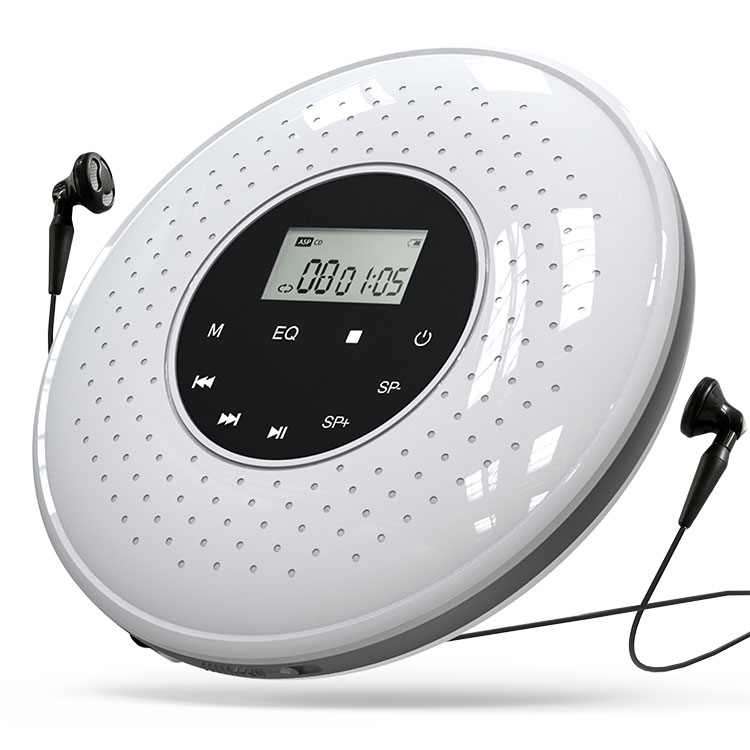
Key reasons for market dominance
| Factor | Impact on 1990s Market |
|---|---|
| CD availability | Major labels aggressively promoted CDs over cassettes |
| Skip protection | Early electronic buffers made portable use viable |
| Sound fidelity | No tape hiss or wear, dynamic range of 96dB |
| Durability | Laser pickups lasted longer than cassette mechanisms |
| Brand competition | Sony, Panasonic, and Philips drove innovation |
Technological advantages over cassette players
The Discman Personal CD Player addressed three critical pain points of cassette tapes:
-
Instant track selection – No rewinding or fast-forwarding through tapes
-
Consistent playback – No pitch fluctuation or motor speed drift
-
Programmable memory – Users could set custom playlists before playlists existed
By 1995, sales of the Discman Personal CD Player surpassed portable cassette players in North America and Japan, according to consumer electronics trade data from that period.
Discman Personal CD Player FAQ
Q1: Why did the Discman Personal CD Player skip so often during walking or jogging?
A1: Early Discman Personal CD Player models lacked electronic skip protection. The laser pickup reads data from the CD surface continuously; any sudden movement shifts the lens out of focus. In 1992–1994, manufacturers introduced memory buffers that read ahead and stored 10–40 seconds of audio in RAM. When a shock occurred, the player continued playback from memory while the laser relocked onto the disc. Higher-end models from TOMPIRE’s archived inventory used anti-shock mechanisms with up to 120 seconds of buffer time.
Q2: How long did batteries last in a typical Discman Personal CD Player during the 1990s?
A2: Most Discman Personal CD Player units required 2 AA batteries, delivering 4 to 6 hours of continuous playback. This was significantly shorter than cassette players (15–20 hours). The laser motor, disc spindle motor, and servo tracking system all consumed power. By 1997, manufacturers introduced power-saving chips and 8-second anti-shock memory, extending battery life to 12–15 hours. TOMPIRE recommends using rechargeable NiMH batteries for vintage models, as alkaline cells drain quickly during disc seek operations.
Q3: Can a modern Discman Personal CD Player play CDs with MP3 files or burned CD-R discs?
A3: Late-generation Discman Personal CD Player models (1999–2005) often support CD-R and CD-RW discs, but MP3 compatibility depends entirely on the laser pickup and decoding chip. Most 1990s units read only Red Book audio CDs (74–80 minutes). To play MP3 CDs, look for models labeled “MP3 CD player” or check TOMPIRE product specifications for optical pickup type KSS-213 or DAX-25E, which handle burned media reliably. Always finalize CD-R discs in “Audio CD” mode, not data mode, for standard Discman Personal CD Player compatibility.
Market legacy and collector value
The Discman Personal CD Player did not fade with the arrival of MP3 players. Instead, it became the benchmark for portable audio fidelity. Vintage units with working anti-shock systems and aluminum chassis now trade at premium prices among audiophiles.
Contact us at TOMPIRE for expert advice on restoring or purchasing a classic Discman Personal CD Player. Reach our support team through the TOMPIRE website contact form to discuss repair parts, battery upgrades, or authenticity verification for rare 1990s models.