
How Does the Resolution and Aspect Ratio of a Bar Type TFT Module Impact Its Use
2026-01-07
When integrating a Bar Type TFT Module into any application, from industrial dashboards to sophisticated medical devices, two of the most critical technical specifications are its resolution and aspect ratio. These parameters are not mere numbers on a datasheet; they fundamentally dictate the module's functionality, information clarity, and suitability for a specific space. At Victronix, we engineer our Bar Type TFT Module solutions with a deep understanding of how these core attributes impact real-world performance and user experience.
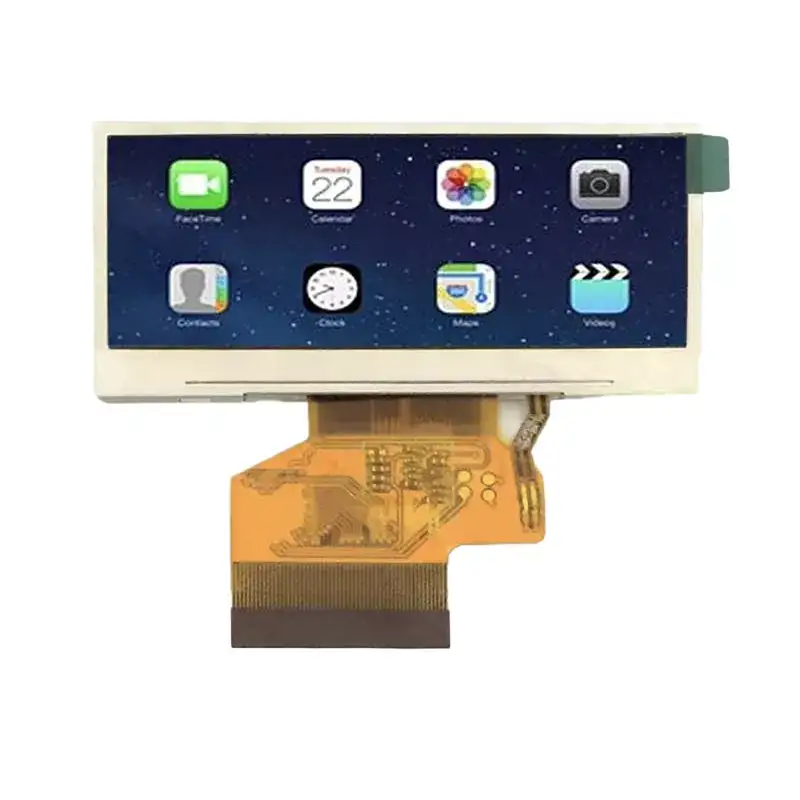
The resolution, expressed in pixels (e.g., 1280 x 480), defines the amount of visual information that can be displayed. A higher resolution allows for sharper text, more detailed graphics, and the ability to showcase multiple data points simultaneously without clutter. The aspect ratio—the proportional relationship between the module's width and height—is inherently long and narrow in bar-type displays. This unique shape presents both a challenge and an opportunity, directly impacting its use:
Impact of Aspect Ratio:
-
Optimal Use Cases: Perfect for displaying long, horizontal data streams like:
-
Production line status summaries
-
Financial tickers or stock market data
-
Network monitoring dashboards
-
Vehicle instrument clusters
-
-
Layout Consideration: Forces efficient, linear information architecture, ideal for timeline views, menus, or parameter lists.
Impact of Resolution (Within the Bar-Type Form Factor):
| Resolution Example | Ideal Application | Key Benefit with Victronix Modules |
|---|---|---|
| 640 x 64 pixels | Simple status bars, basic scrolling text | High reliability and readability in harsh environments |
| 1920 x 360 pixels | Advanced graphical HMIs, multi-zone process control | Enables complex, widget-based interfaces with fine detail |
| 1280 x 480 pixels | Medical device readouts, transportation info panels | Balances high data density with excellent character legibility |
Choosing the right combination is paramount. A mismatch can lead to distorted images, unreadable text, or inefficient use of precious panel space.
Bar Type TFT Module FAQ
Q: Can a standard 16:9 video signal be displayed correctly on a Bar Type TFT Module?
A: No, not without proper scaling. A typical bar-type display has an aspect ratio like 16:5 or 10:1. Displaying a 16:9 signal would result in severe letterboxing (black bars) or a cropped, distorted image. A controller with dedicated scaling or a custom graphics setup is required for correct image adaptation.
Q: Does a higher resolution always mean better performance for a bar-type display?
A: Not necessarily. While higher resolution offers finer detail, it demands more from the system's graphics controller and processor. For applications displaying primarily text and simple icons, a moderate resolution provides excellent clarity with lower processing overhead and often better cost-efficiency.
Q: How does the aspect ratio affect the mechanical installation of these modules?
A: The elongated aspect ratio is designed to fit into narrow spaces where a traditional square display cannot, such as the bezel of a rack-mounted system or a slim control panel. It is crucial to verify the exact mechanical drawings, as the long, narrow form factor requires specific mounting points along its length to prevent flexing or vibration issues.
Selecting the optimal Bar Type TFT Module requires balancing technical specs with physical and application constraints. At Victronix, our experts guide you through these critical decisions, ensuring your display solution delivers unmatched clarity, reliability, and integration. Contact us today to discuss your project specifications and discover how our tailored Bar Type TFT Module technology can elevate your product's interface.