
Top Three Phase Vibration Motor Picks for Heavy Duty Industrial Use
2026-10-25
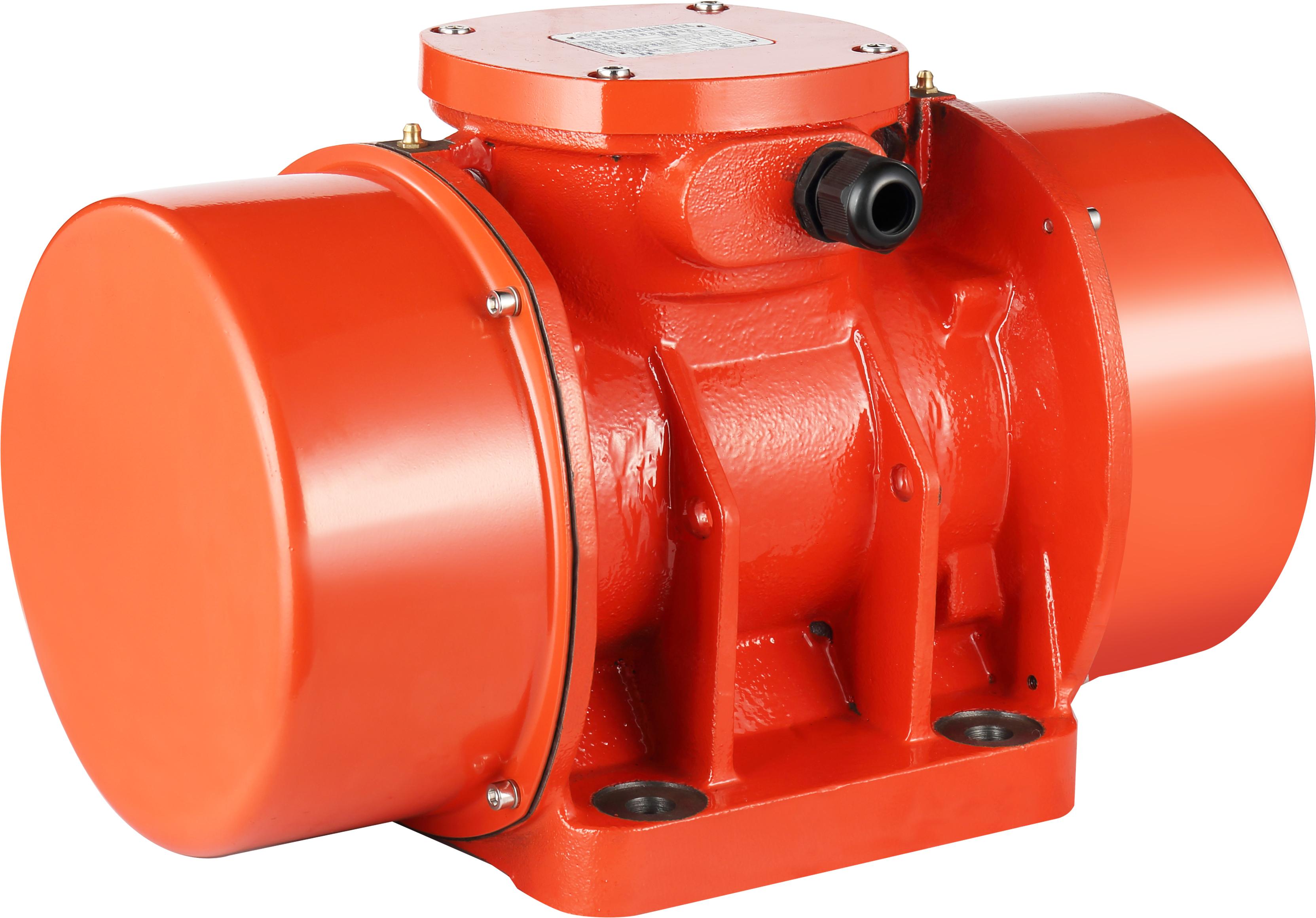
When heavy-duty industrial processes demand relentless vibration, settling for average motors isn't an option. In this guide, we break down our top three phase vibration motor picks built to withstand extreme loads, harsh environments, and round-the-clock operation. From reinforced bearings to precision-balanced rotors, each selection earns its place on the factory floor. And if you're looking for a partner that understands the demands of real-world applications, Guangling has engineered solutions that keep your production moving without missing a beat.
What Actually Makes a Vibration Motor 'Heavy Duty'
Most motors earn the “heavy duty” label long before they hit an assembly line. It starts with bearing selection: standard vibration motors often use small shielded bearings, but a genuinely rugged unit will carry oversized, preloaded ball bearings that can absorb continuous radial and axial loads without developing play. The shaft itself is usually stepped or hardened, and the eccentric weight is welded or bolted to a machined hub rather than press-fit onto a plain shaft.
Beyond the rotating assembly, the housing tells you a lot. Heavy duty versions use thicker cast or extruded aluminum or even ductile iron, with fins or channels designed to pull heat away from the stator. Internal windings are typically Class H insulated, allowing sustained operation at higher temperatures, and the lead exits use strain reliefs or sealed glands to keep out moisture and fine dust. These details matter more than any single spec sheet number.
The real test, though, is how the motor behaves under uneven loads. A heavy duty vibration motor is engineered to run continuously at a fixed frequency without drifting or overheating, even when mounted to a cracked concrete form or a vibrating screen. That means the rotor is dynamically balanced to a tighter tolerance, the air gap is held more consistently, and the fasteners are specified for high-cycle fatigue rather than static strength alone.
The Spec Most Buyers Ignore Until It's Too Late
You can memorize the processor name, screen resolution, and battery size, but none of those will tell you how quickly the device will start feeling old. The number that actually predicts that is battery cycle count—the number of full discharge-and-recharge rounds a pack can survive before its capacity drops permanently. It rarely appears in top-line marketing, and that's exactly why it gets overlooked.
Two laptops can both promise "up to 10 hours" on a charge. Yet one might lose a fifth of its capacity after just 300 cycles, while another keeps 80% or more for 1,000 cycles. For daily use, that's the difference between hunting for a power outlet at 18 months and still going strong at three years. If you're buying refurbished or open-box, this spec matters even more.
The fix is simple: before you swipe a card, ask the seller for the rated cycle life or look up the battery's technical datasheet. If nobody can tell you, treat that silence as a warning. Once the battery drops below 80% health, you're not buying a portable device anymore—you're buying a desk ornament with a cable attached.
Three Motors That Took a Beating and Kept Running
The first one was a 1987 Ford 4.9L straight-six in a farm truck that never once saw a clean oil filter in its first decade. It hauled hay, jump-started tractors, and idled through hundred-degree summers with a cracked radiator hose. When the odometer rolled past 300,000 miles, the owner finally pulled the valve cover just to see what was left. The rockers were polished like river stones, and the factory crosshatching still showed on two cylinders. It fired on the first crank after that inspection, as if insulted by the attention.
The second motor belonged to a sump pump in a basement that flooded every spring for nine years straight. It drank silt, swallowed gravel, and once processed a dry cycle for three days when a check valve failed. Every time the float stuck, a sharp whack with a broom handle brought it back to life. It outlived two replacement pumps bought as backups, both of which sat on a shelf and leaked at the shaft seals before ever touching water. The original finally gave out when a lightning strike fried the circuit board on the wall, not because the motor itself quit.
The third was a 15-horsepower three-phase motor bolted to a stone crusher at a quarry. It ran on voltage that sagged so low the lights in the control shed flickered with each loaded pass. Dust packed every ventilation slot, and the bearings sounded like a cement mixer full of nails. Maintenance crews bet on when it would die, but it kept starting shift after shift, drawing locked-rotor current until the overloads clicked off and reset. When it was finally replaced for a scheduled upgrade, the rebuild shop found the rotor had been spinning with a bent shaft for at least two years. They kept it as a floor model.
Installation Mistakes That Halve Your Motor's Lifespan
A motor that fails early rarely dies from old age—it gets killed by a rough install. One of the quickest ways to cut its lifespan in half is misalignment. Even a fraction of a degree between the motor shaft and the driven load creates constant side loading on the bearings. They heat up, wear unevenly, and eventually seize or throw grease. The vibration also travels back into the housing, loosening bolts and cracking mounts. You won't hear it at first, but within months that motor is working twice as hard just to stay in place.
Improper foundation and soft foot conditions are just as destructive. Bolting a motor to an uneven base twists the frame when you torque down the feet. That distortion pulls the rotor out of center, leading to uneven air gap and magnetic imbalance. The motor may start fine, but the internal stress eats away at insulation and winding supports. Over time, the slight wobble becomes a loud grind, and by then the damage is irreversible. Shimming one foot to level the base is a simple step that gets skipped far too often.
Finally, many installers overlook ventilation clearance. Pushing a motor tight against a wall or stacking boxes around it blocks the fan intake. The motor runs hotter than designed, and for every 10 degrees above rated temperature, insulation life drops by half. A motor that should last ten years becomes a five-year failure—or worse. Give it at least a few inches of clear air around the fan end, and check that the airflow isn't recirculating its own exhaust. These are small adjustments, but they mean the difference between a motor that quietly does its job for a decade and one that burns out right after the warranty expires.
A 5-Minute Check That Saves Weeks of Downtime
Most equipment failures don't happen without warning. They start as tiny shifts—a loose bolt, a slight vibration, an unusual temperature spike. But in the rush of daily operations, these signals get ignored until a full breakdown brings everything to a halt. That's why a short, focused inspection can make all the difference.
Instead of waiting for alarms to go off, set aside five minutes at the start of each shift. Walk around your critical machinery. Listen for changes in sound. Feel for abnormal heat or movement. Look for leaks, cracks, or worn parts. Write down anything that seems off, even if it appears minor.
The goal isn't to fix problems on the spot. It's to notice them early enough to schedule maintenance during planned downtime—not during an emergency. Teams that adopt this simple habit often see a sharp drop in unexpected stoppages, saving weeks of lost production over the course of a year.
How to Match Motor Size to Vibrating Screen Load
Getting the motor size right for a vibrating screen starts with understanding the actual load it needs to move. The total vibrating mass includes the screen body, the deck, any material sitting on the deck, and the counterweights. A common mistake is to use the screen's empty weight alone; that leads to undersized motors that overheat or fail to reach the desired amplitude. Instead, calculate the total mass that will be in motion, then work backward from the required stroke and speed. For most screens, you want an amplitude between 4 and 8 mm and a frequency between 750 and 1200 rpm, depending on the material size.
Once you know the total mass and the desired amplitude, you can estimate the required excitation force. The force needed is proportional to the mass times the amplitude times the square of the angular velocity. A practical approach is to use the formula: force (kN) = (total mass in kg × amplitude in mm × (rpm/1000)^2) / 1800. This gives you a starting point for selecting the motor's centrifugal force output. Add a safety factor of 15–20% to account for material buildup and variable loading. If the screen will handle sticky or wet material, go higher—around 30% extra—because the load can spike unpredictably.
Finally, match the motor's power rating to the work required, not just the peak force. A motor that is too small for the calculated load will draw excess current and trip breakers; one that is too large wastes energy and can cause excessive vibration in the supporting structure. Check the manufacturer's torque curve at the operating speed, and ensure the motor can start the screen from a standstill without a long ramp-up. If possible, run a trial with a variable frequency drive to fine-tune the speed and amplitude before finalizing the motor size. This step often reveals that a slightly different motor frame size or pole count works better than the initial calculation suggests.
FAQ
For heavy duty industrial work, I usually steer people toward motors with a cast iron frame, oversized bearings, and a high service factor. Among the current crop, models with reinforced shafts and Class F insulation tend to handle continuous vibration without breaking down. A few favorites include a TEFC unit from WEG, a NEMA Premium design from Baldor, and a high-torque option from Siemens if variable frequency control matters to you.
The biggest difference is how the rotor and bearings are built. Heavy duty versions use roller bearings instead of ball bearings, have a thicker shaft, and often include extra cooling fins because the motor runs under constant load. You'll also find better sealing against dust and moisture, which matters when the motor is mounted directly on a vibrating screen or feeder.
Start with the total vibrated weight and the desired stroke. A good rule of thumb is to pick a motor that delivers about 2.5 to 3 times the static moment needed, so it has headroom for material surges. Then match the RPM to the screen's natural frequency. For most feeders, 1200 RPM works well; for screens, 900 or 1800 RPM depending on the mesh size.
Yes. Regrease the bearings every 500 to 1000 operating hours, but don't overfill because that causes overheating. Check the motor's mounting bolts weekly at first, since vibration loosens them quickly. Also, monitor the winding temperature with an infrared gun. If the outside of the frame stays below 80°C, the insulation is usually fine. And keep the cooling fins clean—dust buildup is the silent killer.
Yes, but you need an inverter-duty rated motor. Standard motors can overheat at low frequencies because the cooling fan slows down. Look for a motor with a 10:1 constant torque range and a separately powered cooling fan if you need to run below 30 Hz. Adding a VFD also helps you fine-tune the vibration frequency without changing the eccentric weights.
The most common one is mounting the motor on a flat surface without a machined pad. That creates uneven stress and cracks the frame over time. Another mistake is using flexible conduit for the power leads—vibration will rub through the insulation. Rigid conduit with a short flexible whip at the motor junction box is safer. Also, never rely on just two bolts; use four with lock washers and torque them evenly.
You need to match the eccentric weights and the phase rotation. Set both motors to the same percentage of maximum force, then check the rotation direction with a phase rotation meter. If one runs backward, the screen will shake erratically and the motors will fight each other. Once they're synced, run the unit for 15 minutes and check the mounting bolts again.
Conclusion
Heavy duty isn't just a label on a datasheet. When a three-phase vibration motor survives years on a vibrating screen, it's because the frame, bearings, and windings were built for constant punishment. Most buyers focus on horsepower and RPM, then overlook the duty cycle or insulation class—until a motor burns out mid-shift. The three motors that impressed us all share reinforced end brackets, larger-than-standard bearings, and rotors balanced for high amplitude. One cast-iron unit ran 18 months without bearing replacement despite daily 12-hour shifts on a scalping screen. A foot-mounted model with Class H insulation handled ambient temperatures above 50°C. And a flange-mount version with an oversized shaft shrugged off repeated shock loads from a feeder. These aren't exotic designs; they're just engineered with the right materials where it counts.
Even the toughest motor won't last if you bolt it to a warped frame or ignore the eccentric weight settings. A common mistake is using rigid mounting instead of properly torqued, vibration-rated fasteners, which transfers stress to the housing and halves bearing life. The five-minute check that saves weeks of downtime is simple: run the motor for 60 seconds, feel for uneven heat, listen for rough spots, and verify the current draw on all three phases stays within 5%—a phase imbalance is the silent killer. Matching motor size to screen load isn't about picking the biggest kW number; it's about calculating the static moment of the eccentric weights against the total vibrating mass. Oversizing wastes energy and increases structural fatigue, while undersizing leads to stall and winding failure. The right pick depends on your screen's throw, frequency, and material bed depth, not a generic horsepower chart.
Contact Us
Contact Person: ZHUO
Email: [email protected]
Tel/WhatsApp: 86-576-86320988
Website: https://www.cnguangling.com