
Oil-Injected Compressor Manufacturer Essential Tips for Finding a Reliable Partner
2026-10-01
Choosing the right oil-injected compressor manufacturer can make or break your operation's efficiency and uptime. With so many suppliers claiming top performance, how do you separate genuine expertise from empty promises? Whether you're upgrading an existing system or building a new facility, the stakes are high—downtime, energy costs, and maintenance headaches all trace back to your compressor partner. Seize Air understands that a reliable partnership goes beyond a spec sheet. In this guide, we'll walk you through the essential tips for finding a manufacturer who delivers consistent air quality, responsive support, and long-term value—without the fluff.
Look Past the Spec Sheet: Three Performance Metrics That Matter
Most spec sheets are great at selling a product, but they are terrible at telling you how it actually feels in your hands. A processor can boost to an impressive clock speed for a few seconds, and a display can claim a 1ms response time that only exists in a test pattern. What really separates a smooth experience from a frustrating one are three less glamorous metrics that rarely make the front of the box.
First, look at frame time consistency, not just average FPS. A game running at 100 frames per second can still feel choppy if frames arrive in uneven bursts. Second, pay attention to system latency — the delay between your input and the action appearing on screen. Low latency matters more than high refresh rates in fast-paced scenarios. Third, check how performance holds up under sustained load. Many devices throttle heavily after a few minutes, which means that dazzling benchmark score tells you almost nothing about real-world endurance.
Once you start evaluating these three metrics, the spec sheet becomes a starting point rather than a final answer. A device with slightly lower peak numbers can easily outperform a spec-sheet champion if it delivers steady frame pacing, responsive input, and consistent throughput when things heat up.
How Much Does Downtime Really Cost You? Pick a Partner Who Stocks Parts
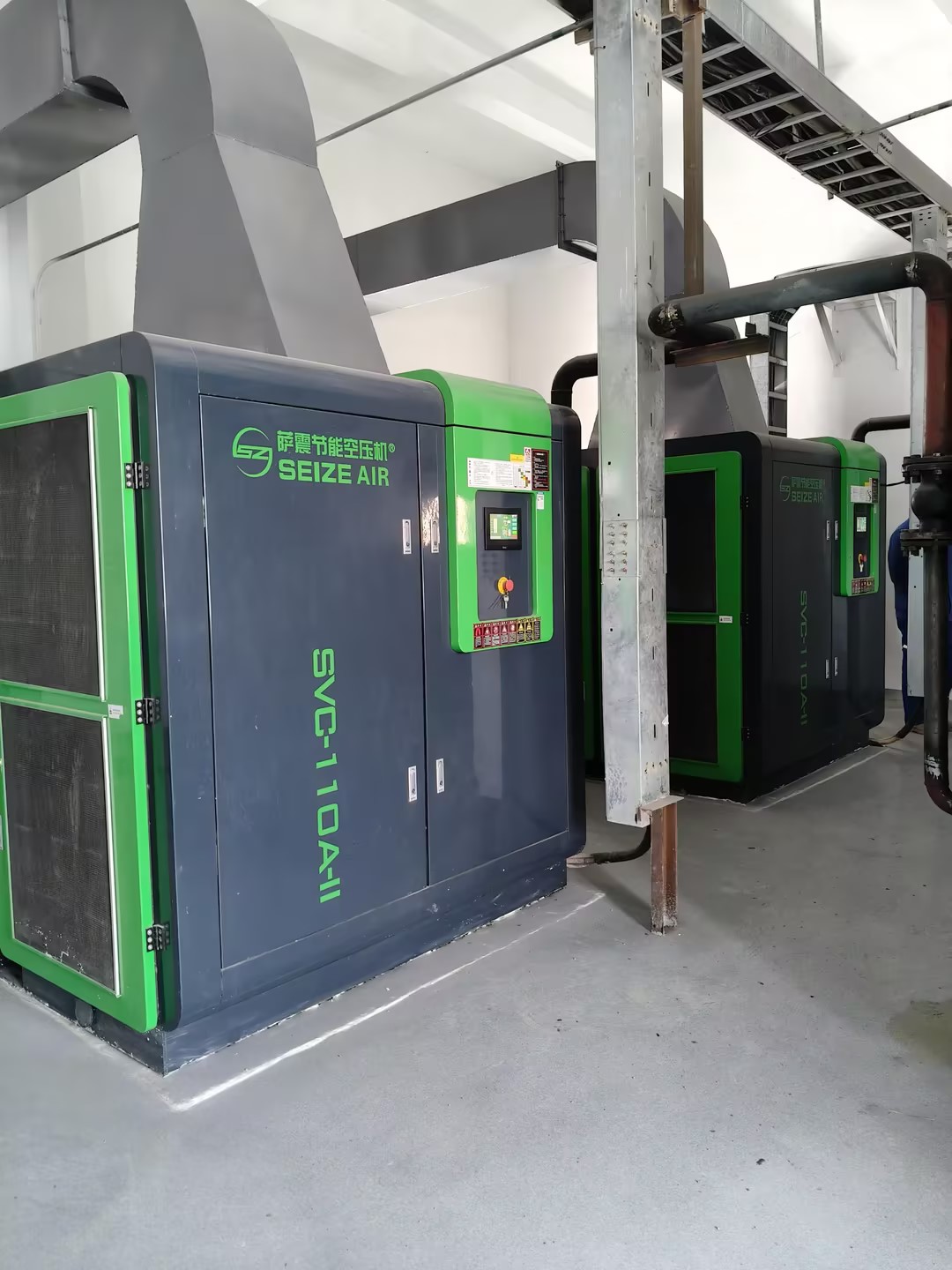
Every hour your operation sits idle drains money that never comes back. Lost production, missed deadlines, idle labor, and emergency freight all pile up faster than most managers expect. The real sting isn't just the immediate loss—it's the long-term damage to customer trust and your team's morale. Too many companies learn this lesson only after a critical component fails and they discover their supplier needs two weeks to ship a replacement.
That's why the parts inventory your partner keeps on hand matters more than their price sheet. A supplier with a deep, well-organized stock of spares can turn a potential disaster into a brief pause. They understand which components fail most often and keep those on the shelf, not in a distant warehouse. When you call at 2 a.m. with a downed line, the answer you want to hear is "we have it in stock," not "we can order it for you."
Before you sign another service agreement, ask the hard question: what do you actually have available today? Look beyond the glossy brochures and check the shelf depth, the inventory tracking system, and the average emergency response time. A partner who stocks parts is really a partner who respects your uptime. Choose accordingly, and you'll stop calculating downtime costs you could have avoided.
Ask for Field References, Not Just Factory Tours
Walking through a production floor gives you a sense of scale and cleanliness, but it rarely shows how equipment holds up after six months of real-world abuse. Ask the supplier for contact details of current customers running similar applications to yours, then call them directly. Listen for comments about downtime, unexpected maintenance, or how the vendor handled a breakdown at 2 a.m. Those stories carry far more weight than any polished demo line.
A field reference isn't just a name and phone number—it's an invitation to probe beyond the sales script. Request permission to visit the reference site in person if geography allows, or at minimum schedule a video walkthrough. Watch how operators interact with the machine, ask about spare parts lead times, and find out whether the promised energy savings actually showed up on the utility bill. This is where you'll uncover the gap between brochure claims and daily reality.
Most vendors will eagerly offer a reference list, but don't stop there. Push for references from clients who have had the equipment for at least two years, and ask for at least one who has already gone through a major upgrade or repair cycle. If a supplier hesitates or can only provide references from small, low-stress installations, treat that as a warning sign. Solid field evidence separates a vendor with a good factory from one with a truly dependable product.
Why Local Service Response Time Beats Global Promises
When a production line halts or a server rack throws a thermal warning, the last thing any operations manager wants is a ticket routed through three time zones and a language barrier. Local service teams live in the same traffic patterns, power grids, and weather events as their clients, which means a technician can often be on-site before a remote support desk has even finished gathering logs. That physical proximity compresses the gap between “we see the issue” and “we are standing next to the machine,” and that gap is where revenue, safety, and customer trust usually leak away.
Global contracts look impressive in a boardroom, with their 24/7 coverage maps and multi-region escalation matrices. But those promises are built on averages and routing algorithms, not on a neighbor who knows which freight elevator is fastest during shift change or which breaker panel feeds the test lab. A local provider’s response time is not just shorter in minutes; it is shorter in context. They do not need a site walkthrough to find the loading dock, because they have replaced a compressor there twice this year.
The real advantage is less about geography and more about accountability. A local service firm cannot hide behind a ticket queue or a contractual SLA that resets every time the issue is “reopened.” If they are slow, they lose the next five calls from that industrial park. If they are fast, word travels through maintenance supervisors faster than any marketing campaign. That reputational gravity makes response time a habit, not a promise—and in critical operations, a habit is worth more than a thousand global response-time guarantees.
What Your Oil Analysis Reveals About a Manufacturer's Build Quality
A used oil sample taken shortly after break-in can read like a fingerprint of the assembly line. If the spectrometer picks up elevated copper and tin right away, it often points to aggressive bedding of bearings or bushings that weren't machined to a tight enough clearance. The metals aren't just wear indicators; they reveal how consistently the builder held tolerances across the entire production run. One engine may show almost no copper at 500 miles, while its sibling from the same factory dumps copper for 3,000 miles. That spread tells you more about process control than any marketing brochure.
Silicon is another quiet informant. Abnormally high silicon in the first oil change usually isn't from airborne dirt entering through the intake, but from casting sand or sealant debris left inside the block and heads. A manufacturer with poor washdown procedures or sloppy gasket application will routinely send engines out with residual grit. Over time, that silicon acts as a lapping compound, accelerating wear on every sliding surface. Oil analysis catches it before the damage becomes audible, giving you an early read on how clean the internal environment really is.
Perhaps the most underrated insight comes from the additive package itself. If viscosity drops out of grade after only a few thousand miles, it can indicate excessive fuel dilution from incomplete ring seating or poor cylinder honing—both direct results of build quality. A well-honed cylinder wall with the correct crosshatch angle will seat rings quickly and keep blow-by minimal, preserving oil integrity. When oil analysis repeatedly shows the additive base being depleted faster than expected, you're not seeing an oil problem. You're seeing a manufacturing problem that no oil brand can fix.
Before You Sign: Warranty Clauses That Manufacturers Don't Highlight
The box promises five years of coverage, but the exclusions start on page six, usually in a font that doesn't invite reading. One clause worth hunting down is the requirement to use only manufacturer-approved service centers for routine maintenance. If you take your device or vehicle to an independent shop, even for something as simple as a filter change, the company can deny a later claim because the work wasn't done by their certified network. It doesn't matter that the local mechanic did the job correctly; the clause focuses on who, not how.
Warranty booklets love the phrase "normal wear and tear" because it gives them an exit ramp from almost any issue that develops gradually. Batteries that lose capacity after a year, hinges that loosen, paint that fades—all of this can be pushed into that broad category and refused. What makes it worse is that the definition is often left vague, so the manufacturer gets to decide case by case after you've already paid for the product.
Before you file the paperwork away, look for transfer restrictions and mandatory arbitration clauses. Many warranties are only valid for the original purchaser, meaning the remaining coverage vanishes the moment you sell the item privately. Arbitration clauses, often buried near the end, require you to settle disputes through a private process instead of taking the company to court, and that process typically favors the repeat player—the manufacturer. None of this appears on the front of the box or in the headline claims, but it changes what the warranty actually protects.
FAQ
Start with their track record in your specific industry. Ask for case studies or references from businesses with similar air demand, operating hours, and environmental conditions. A manufacturer that has solved problems for others in your niche is far more likely to deliver a machine that fits your workflow than one with only general experience.
It often matters more than the sticker price. Oil-injected compressors need regular filter changes, oil top-ups, and occasional repairs. If a manufacturer has slow spare parts delivery, no local service engineers, or vague maintenance schedules, downtime will quietly eat into any upfront savings. Ask about response times, stocked parts in your region, and whether technicians are factory-trained.
Watch for pushy sales tactics that rush you past technical specs, a lack of documented performance data, or reluctance to allow a factory visit. Also be wary if the warranty covers only a narrow list of components and excludes the airend or motor. Vague answers about oil carryover limits, pressure dew point control, or noise levels often signal that the supplier does not truly understand oil-injected systems.
Ask for the total number of oil-injected units they have built and currently support, not just the years they have been in business. Request field data on oil consumption, airend lifespan, and common failure points. A reliable manufacturer will openly share maintenance logs, rebuild histories, and even let you speak with long-term customers about real operating costs.
Oil-injected machines depend on consumables like separator elements, oil filters, and lubricants. If those parts are only available from a single overseas warehouse, a minor issue can become a week-long shutdown. Check whether the manufacturer uses standard, widely available components or proprietary parts. Local stock, same-day dispatch, and third-party compatibility all reduce your risk.
Go beyond the warranty period. Ask exactly what is included: airend, motor, control system, and oil carryover performance. Also clarify what voids the warranty, such as using non-approved oil or missing scheduled services. A solid service contract should spell out response hours, spare part delivery guarantees, and whether preventive maintenance is included or billed separately.
Look at the details that are easy to overlook: hose routing, vibration dampening, enclosure sealing, and filtration quality. Request a teardown video or factory tour to see how the airend is machined and assembled. Check whether the oil cooler and aftercooler are sized for your maximum ambient temperature, not just ideal lab conditions. Solid build quality usually shows in low noise, stable oil temperature, and consistent pressure output.
Off-the-shelf models rarely match every application. A good manufacturer will adjust control logic, tank size, filtration stages, or cooling options to fit your compressed air profile. Ask how they handle variable demand, high humidity, dusty environments, or continuous duty cycles. If the answer is always 'our standard unit works fine,' you are probably talking to a reseller rather than a true manufacturing partner.
Conclusion
Finding a reliable oil-injected compressor partner starts by ignoring the glossy brochures. Instead, ask for actual performance data under real operating conditions—how the unit holds pressure at high duty cycles, what its specific power consumption looks like at partial load, and how quickly it recovers after a pressure drop. These three metrics rarely appear on a standard spec sheet, yet they reveal far more about long-term running costs than a headline horsepower figure. Equally important is the cost of downtime. A manufacturer that keeps a deep local stock of wear parts, filters, and seals can save you days of lost production, while one that waits on overseas shipments turns a simple repair into a financial headache. Don't be swayed by a polished factory tour; ask for references from operators who run similar shifts, compressors, and maintenance schedules. Better yet, find out how fast their local service engineer actually arrives when a unit trips at 2 a.m. Global promises mean little if the nearest trained technician is a flight away.
Beyond service and parts, you can learn a lot about build quality from used oil analysis. A manufacturer who pays attention to machining tolerances and filtration will show consistently low wear metals and stable viscosity, not a report full of copper, iron, or silicon spikes. That kind of data doesn't lie. Finally, before you sign anything, pull the warranty document apart clause by clause. Many manufacturers quietly exclude coverage for labor, require you to use only their branded oil at inflated prices, or void the warranty if a third-party technician so much as opens the cabinet. A trustworthy partner will be upfront about these terms and might even welcome your questions. In the end, reliability isn't about a brand name on the tank—it's about the people who stand behind the machine when it matters most.
Contact Us
Contact Person: Mia
Email: [email protected]
Tel/WhatsApp: +86 19821985894
Website: https://www.seize-air.com