
Industrial Air Conditioning Manufacturer: How to Choose the Right Cooling Partner for Your Facility
2026-10-17
Every facility manager knows the pain of an overworked cooling system—downtime, humidity swings, and energy bills that climb with every degree. Picking an industrial air conditioning manufacturer is more than a procurement task; it’s a bet on your production uptime. In this guide, we cut through the noise to help you evaluate cooling partners, and we’ll also show you why Tongbaote deserves a closer look.
Beyond the Brochure: Verify Engineering Depth Before You Sign
A glossy brochure might promise a dedicated team of senior architects, but the real story lives in commit histories and incident reports. Before you sign, ask for a walkthrough of an actual system they built—not a sanitized demo, but the one where the database nearly fell over during peak traffic. Listen for how they describe that failure. If the answer leans on vague process language instead of concrete trade-offs, treat it as a warning sign.
Check where the engineering depth actually sits. A firm can staff a sales call with two principals and then hand your project to a rotating cast of contractors. Request the names and backgrounds of the people who will write code or configure infrastructure, not just the ones who shake hands. Ask whether senior staff review pull requests, how long on-call rotations last, and who gets paged when a critical service goes quiet. If those questions make the room uncomfortable, you have your answer.
Finally, verify their understanding of your specific problem before you commit. A deep engineering team will push back on a rushed timeline or an unrealistic scope—not because they're difficult, but because they've seen what breaks under pressure. Ask for a small paid discovery or a technical deep-dive session before the main contract. The cost of that short engagement is trivial compared to discovering later that the pretty architecture diagram was drawn by someone who left the company six months ago.
Cooling Load Reality Check: Size Systems to Your Facility’s Actual Peaks
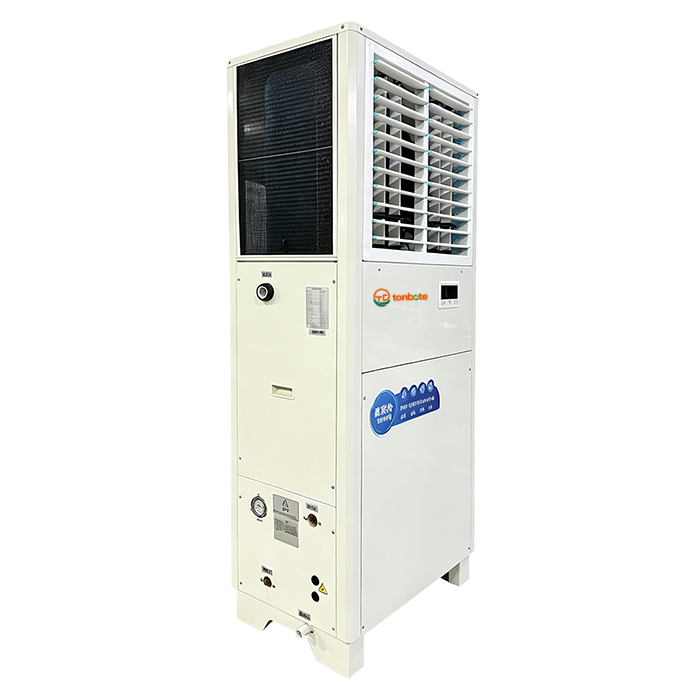
Most cooling systems are sized using rule-of-thumb assumptions that bear little resemblance to what actually happens inside the building hour by hour. The result is equipment that cycles on and off excessively at part load, wastes energy through needless compressor starts, and never hits the efficiency numbers promised on paper. A better starting point is to pull the facility's own interval data—whether from the BAS or temporary loggers—and map the real peak cooling demand rather than relying on a conservative estimate inflated for safety margins.
When you match system capacity to the true measured peak, you stop paying for tons of refrigeration that rarely run. Oversized chillers and rooftop units tend to short-cycle, which accelerates wear on contactors and compressors while leaving humidity control inconsistent. By right-sizing to the top 1% of load hours instead of the absolute theoretical maximum, you maintain comfort on the few genuinely extreme days and gain better latent heat removal during the remaining 99% of operating time.
Field verification also reveals that internal gains from lighting, plug loads, and occupancy often drop below design assumptions, especially after LED retrofits or hybrid work schedules. Before replacing a failed chiller or adding capacity, take a month of submetered data and compare it against the original load calculation. The gap between design intent and actual peak is usually large enough to downsize the next unit by a full frame size—cutting first cost, reducing peak demand charges, and simplifying the condenser water loop all at once.
The Uptime Clause: Contract Terms That Protect Your Production Floor
Every minute your production line sits idle, the cost stacks up in ways that never show on a standard invoice. This is where the uptime clause earns its place—not as boilerplate, but as a practical lever. Well-drafted terms go beyond a vague promise of reliable equipment; they define what happens when a critical asset fails, how quickly a supplier must respond, and who absorbs the financial hit during unplanned downtime. Without that specificity, you're left negotiating in the dark while order deadlines slip.
A strong uptime clause ties service obligations to measurable outcomes. Instead of accepting “best efforts” language, push for metrics like mean time to repair, guaranteed response windows, or a percentage of operational availability per quarter. The real protection comes from pairing those numbers with clear remedies—service credits, expedited parts at the supplier's expense, or even the right to source alternative fixes and offset the cost. When the penalty matches the pain of lost output, suppliers suddenly find maintenance schedules that actually work.
Equally important is what the clause says about exclusions and reporting. If routine wear, software glitches, or third-party components fall outside the guarantee, you need to know before signing. Require the supplier to share uptime data in a format you can audit, and set a cadence for joint reviews. That turns a static contract term into an ongoing performance discussion—one where your production floor, not the fine print, sets the standard for what “protected” really means.
Energy Draw Under Scrutiny: What Real Efficiency Data Looks Like
Most efficiency figures published by hardware vendors are derived from idealized lab conditions—steady loads, controlled ambient temperatures, and a narrow operating window. Real-world energy draw rarely behaves that way. When you track power consumption at the wall over a full day, you'll see constant fluctuations: idle spikes from background tasks, brief surges when fans ramp up, and significant differences between 20% and 80% load. A PSU rated at 90% efficiency on paper might sit closer to 82% during typical mixed workloads simply because it's not operating near its optimal curve.
Another overlooked variable is the quality of the measurement itself. Cheap inline watt meters can miss short transients or report averaged values that hide momentary peaks. Dedicated logging equipment with high sampling rates often reveals that a device's "average" draw is less meaningful than its 95th percentile consumption, especially in setups with variable frequency drives or bursty network traffic. True efficiency data should include not just a single number but a distribution: minimum, median, peak, and the duration spent above a given threshold.
Finally, comparing real efficiency across products requires matching workload patterns. A server that sips 40W at idle but spikes to 300W under load isn't necessarily worse than one that draws a flat 150W—it depends entirely on what you're running and for how long. Without context, a low idle number can mask poor transient response, while a high peak might be irrelevant if it occurs for only seconds per day. The data worth trusting is measured over weeks, in the environment where the hardware actually lives, not on a test bench.
From Installation to Overhaul: Reading a Manufacturer’s Service Footprint
A manufacturer's service footprint often starts long before the first bolt is tightened. Installation procedures, commissioning checklists, and the way field engineers handle unexpected site conditions say a great deal about how seriously a company takes its long-term obligations. Look closely and you'll notice whether the team documents minor deviations or quietly patches them and moves on. That early discipline usually predicts how smoothly a machine will enter its operational life.
The middle of the lifecycle is less glamorous but equally telling. Scheduled maintenance intervals, spare parts availability, remote diagnostics, and the willingness to publish service bulletins all form a pattern. A manufacturer that treats routine upkeep as a revenue stream rather than a partnership will inevitably reveal itself through opaque pricing, slow technical support, or reluctance to share wear data. Those habits rarely remain hidden for long once operators begin comparing notes.
Overhaul work is the final and most honest chapter. Whether a manufacturer offers genuine rebuild programs, reverse-engineers legacy components, or simply stops supporting older models after a few years determines the true cost of ownership. Companies that maintain detailed service histories, provide reconditioning standards, and stand behind overhauled assemblies with real warranties demonstrate a footprint built for decades, not just the initial sale.
Custom Air Handling: When Off-the-Shelf Units Fall Short
Many buildings come with unusual spatial constraints that standard air handling units simply cannot accommodate. A mechanical room tucked into a narrow corner, an existing shaft that limits height, or a rooftop with strict weight restrictions all push project teams toward custom fabrication. Instead of forcing square pegs into round holes, designers can specify coil sections, fan arrangements, and access doors that fit the actual footprint — not the other way around.
Performance requirements also drive the need for custom work. Extremely high humidity control for archival storage, aggressive filtration for laboratory exhaust, or low-temperature supply air for food processing often fall outside typical catalog ranges. Off-the-shelf units may handle one of these well, but rarely all at once without compromises. Custom air handlers allow engineers to prioritize the exact sequence of coils, energy recovery, and controls that a process demands.
Then there's the question of longevity in harsh environments. Coastal salt spray, corrosive industrial fumes, or desert dust can shorten the life of standard galvanized cabinets. Custom units with stainless steel interiors, special coatings, and reinforced frame members keep operating where generic equipment would fail. The higher initial cost is often recovered through fewer replacements and less unplanned downtime over the unit's service life.
FAQ
A real partner starts by studying your production environment, heat loads, and downtime tolerances before proposing anything. They ask about future expansion, ambient conditions, and even dust or corrosive elements. If a manufacturer jumps straight to a model number without that conversation, keep looking.
It matters more than most people expect. Standard units rarely match the reality of a busy plant. The right manufacturer will adjust coil coatings, airflow patterns, control logic, and even cabinet dimensions to fit your layout. Customization isn't a luxury—it's often the difference between a system that struggles and one that runs quietly in the background for years.
Ask for part-load performance data, not just full-load ratings. Most industrial cooling systems spend far more time at partial capacity. Look at integrated energy efficiency ratios, variable-speed compressor options, and whether the controls can stage cooling based on real-time demand. A trustworthy manufacturer will share detailed curves and help you model annual operating costs for your specific climate and load profile.
You want more than a phone number. Ask about on-site service response times, spare parts availability for at least 10–15 years, and whether technicians receive training on your specific configuration. Some manufacturers offer remote monitoring that flags performance drift before a failure. That proactive approach can save you from costly unplanned shutdowns.
Experience in your sector shortens the learning curve dramatically. A manufacturer familiar with food processing understands washdown requirements and bacterial growth risks. One that works with data centers knows how to handle high sensible heat ratios and redundancy. General competence is fine, but industry-specific know-how often prevents expensive oversights in the design phase.
Don't just ask for a promised date—ask for their on-time delivery record over the past two years. Inquire about where components are sourced and whether they hold buffer stock for critical parts. A slightly longer lead time with a proven track record beats an aggressive promise that slips. Also check if they offer phased installation or temporary cooling if your project timeline is tight.
Vague answers about warranty terms, reluctance to provide references from similar facilities, or a sales process that focuses only on upfront price are all warning signs. If they can't explain how their equipment handles voltage fluctuations, high ambient temperatures, or dirty power—common in industrial settings—they probably haven't engineered for the real world.
Conclusion
Selecting an industrial air conditioning manufacturer goes far beyond comparing spec sheets. The first thing to scrutinize is the engineering team behind the quotes. Ask for detailed load calculations based on your facility's actual peak heat gains, not generic square-footage rules. A manufacturer that pushes oversized equipment without measuring your specific processes, machinery, and occupancy patterns is likely padding the sale rather than solving your cooling problem. Look for evidence of custom air handling capabilities when standard rooftop units or chillers cannot match your airflow, filtration, or space constraints. If they cannot explain how they derived the cooling tonnage, walk away.
Equally critical are the contractual and operational guarantees. Read the uptime clause carefully: what response time is promised for critical failures, and are parts stocked locally or shipped from overseas? Demand real energy efficiency data from installed projects, not just catalog EER or IPLV numbers. A reputable manufacturer will share logged performance curves and annual kWh figures from similar facilities. Finally, map their service footprint from installation through major overhauls. If the nearest technician is a third-party contractor with no factory training, your production floor bears the risk. The right partner combines engineering depth, honest sizing, enforceable uptime terms, verified efficiency, and a service network that can reach you before downtime spirals.
Contact Us
Contact Person: Wanshu Chen
Email: [email protected]
Tel/WhatsApp: +86-13662871206
Website: https://www.mbcee.com