
China Silicon Carbide Powder Supply Chain and Quality Advantages Explained
2026-09-22
Silicon carbide powder doesn't make headlines, but it decides whether your semiconductors, abrasives, or ceramics hold up under real-world stress. With China now dominating global SiC powder supply, the critical question isn't where to buy—it's who can deliver consistent quality, batch after batch. That's where HUAYI TECH stands out. By combining deep local supply chain control with rigorous quality benchmarks, HUAYI TECH transforms China's scale into a genuine performance advantage. But not all powder is equal—here's what separates premium SiC from the rest.
How China’s Vertical Integration Keeps SiC Powder Costs Down Without Cutting Corners
Most Western SiC powder producers buy high-purity silicon and graphite from third-party suppliers, which adds markup and forces them to accept whatever particle size or impurity profile arrives. Chinese manufacturers, by contrast, often run their own polysilicon reduction and graphitization lines a few hundred meters from the powder synthesis furnaces. That means the raw feed can be tuned to the exact stoichiometry of the Acheson or Lely process before it ever reaches the reactor, cutting out two layers of shipping, warehousing, and quality disputes.
Vertical integration also changes how defects are handled. Instead of rejecting an entire batch because a trace metal drifted out of spec, an integrated plant can divert the affected lot back to an earlier purification step, adjust the carbothermal reduction temperature, and still ship powder with the same particle size distribution and alpha-phase content. This closed-loop rework is rarely possible when you only buy SiC grit and mill it; the cost of re-purification would erase the margin. Keeping the full chain under one roof turns what would be scrap into a recoverable intermediate.
The savings do not come from relaxing purity standards. Chinese SiC powder suppliers still run glow discharge mass spectrometry on every lot and track the 3C/4H polytype ratio, but they do it with instruments shared across the integrated production line, so the cost per kilogram drops. The result is a product that meets the same semiconductor-grade specs as Japanese or European powder, yet sells for 20–30% less because there is no handoff markup between raw material, synthesis, and classification.
The Hidden Role of Local Raw Material Access in Consistent SiC Purity
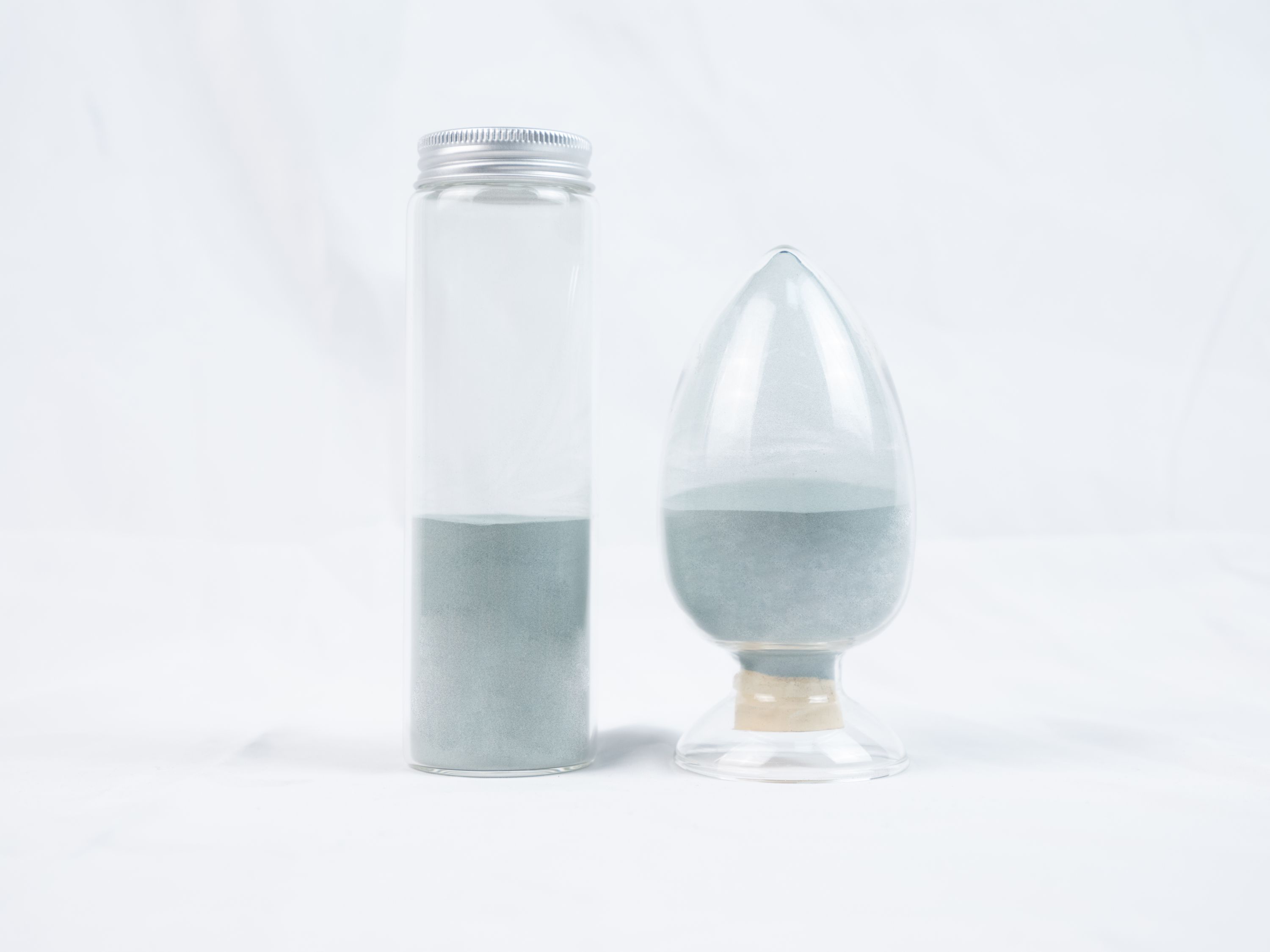
When a silicon carbide producer can draw quartz, petroleum coke, and recycled scrap from nearby sources, the path to stable purity becomes far less tangled. Long-distance supply chains often introduce subtle shifts in trace metal content or moisture levels, and those shifts don't always reveal themselves until sintering or crystal growth goes sideways. A local quarry or coking unit tends to change its output slowly, so the plant has time to adjust furnace settings instead of chasing sudden impurities from a new shipment.
Beyond raw chemistry, close geographic ties allow for informal but rigorous supplier relationships. Engineers can visit a mine or a coker, inspect the crushing and washing steps, and even request tighter sizing or lower iron limits without waiting weeks for a revised spec sheet. That kind of direct feedback loop means a lot when you're guarding against boron, aluminum, or titanium spikes that can ruin the electrical performance of the final SiC powder or crystal.
Transport distance also plays a quieter role. Shorter hauls reduce the chance that bags or bulk containers pick up ambient moisture, road salt, or cross-contamination during transfer. For high-purity SiC destined for power electronics or wear-resistant components, these small local advantages accumulate into a much more predictable lot-to-lot purity profile.
Why Chinese SiC Powder Makers Are Winning on Custom Particle Sizing
Custom particle sizing in silicon carbide isn't just about hitting a median diameter on a spec sheet. It demands tuning the full distribution curve—tail control, morphology consistency, and surface cleanliness—to match how the powder actually flows, packs, and sinters in a customer's process. Chinese producers have built an edge here by treating sizing as a co-engineering problem rather than a downstream afterthought. Many operate in-house air classifiers and jet mills alongside their furnaces, so they can adjust cut points, remove fines or oversize fractions, and verify results on the same day a trial order is placed.
That responsiveness is reinforced by scale and vertical integration. Because Chinese SiC powder plants are often clustered near raw material sources and abrasive-grade production, they can draw on a wide range of precursor grit sizes without long lead times. A request for a narrow 5–7 µm cut with a tightly capped coarse tail isn't routed through multiple external toll processors; it's handled within one facility where the team has direct feedback from crushing, milling, and classification stages. This short loop reduces the trial-and-error cost that usually makes custom sizing unattractive for Western suppliers focused on standard commodity grades.
Equally important is the willingness to run smaller, dedicated campaigns. Rather than forcing every order through a single optimized process, many Chinese makers keep semi-idle classification lines or schedule weekend runs for non-standard distributions. Combined with a strong domestic market for advanced ceramics, coated abrasives, and semiconductor-adjacent components, this creates continuous demand for tailored powders—so the expertise doesn't sit on a shelf. The result is a supplier culture where a customer can ask for a shifted D10, a steeper slope between D50 and D90, or a modified particle shape, and expect a workable sample within weeks, not quarters.
Inside the Quality Control Loops That Separate Reliable Suppliers From the Rest
Most buyers only see the polished final product, but the real dividing line between dependable suppliers and the rest sits inside their quality control loops. A reliable supplier rarely talks about a single inspection step; instead, they run overlapping checks at raw material intake, mid-production, and pre-shipment. These loops aren't ceremonial. They're designed to catch drift before it becomes a shipment of rejects, and the best ones feed data back into the process rather than just sorting good from bad.
Look closely at how a supplier handles a failed batch. The ones worth keeping will pause the line, trace the exact lot number, and adjust the machine or material spec—often within the same shift. Others will simply rework the visible defects and hope the next audit doesn't notice. That reactive-versus-preventive split shows up in everything from torque settings to humidity logs. Reliable suppliers treat their QC loop as a living system, not a checkbox for the client's file.
Another tell is the gap between what the QC manager says and what the line workers actually do. In strong suppliers, the loop includes short daily standups where operators report anomalies without fear of blame. That kind of psychological safety is rare, but it's precisely what turns a routine inspection into an early warning system. When you walk the floor, ask to see the last three corrective action reports—if they're handwritten, dated, and signed by the operator who fixed the issue, you're likely dealing with a supplier that separates itself from the pack.
From Abrasives to EVs: How One Powder Adapts Across High-Stakes Applications
Most industrial powders stay in their lane. Silicon carbide, though, never got that memo. For decades it was the grit on sandpaper and the cutting edge of grinding wheels, valued for a hardness just shy of diamond. Then engineers realized the same crystal structure could handle something far more demanding: switching hundreds of amps inside an electric vehicle's inverter. Suddenly, a material born from abrasives was being grown into near-perfect wafers, each one worth more than its weight in steel.
The leap isn't just about purity, though that matters enormously. Abrasive-grade SiC can tolerate impurities that would ruin a semiconductor. What makes the same powder family work in both worlds is a rare mix of thermal conductivity, wide bandgap, and resistance to breakdown under intense electric fields. In an EV, that translates to less energy lost as heat, smaller cooling systems, and batteries that stretch further on a single charge. The powder doesn't care whether it's scratching metal or steering electrons—it just does both with the same stubborn reliability.
This dual life also reshapes supply chains. Mining and processing operations that once served only grinding wheel manufacturers now feed a market hungry for high-purity feedstock. Some producers even run parallel lines: one for coarse abrasives, another for the exacting specs of power electronics. It's a rare example of a legacy material quietly becoming the backbone of a clean-energy transition, without ever shedding its original job. The powder didn't adapt—it was always capable. The applications finally caught up.
What Global Buyers Should Verify Before Locking in a Chinese SiC Powder Source
Before committing to a SiC powder supplier in China, global buyers need to move beyond glossy brochures and verify actual material specifications. Ask for impurity profiles, crystal structure confirmation, and precise particle size distribution data from recent production batches—not just nominal ranges. Reputable vendors should provide test reports from independent labs, but even those need cross-checking against your own incoming inspection protocols.
Consistency across shipments is another major concern. A single sample may look perfect, yet real problems surface when lot-to-lot variation creeps in. Request historical batch records, review their process control charts, and if possible, arrange a third-party audit of the manufacturing facility. Pay attention to how they handle raw material sourcing and whether they quarantine non-conforming output.
Finally, verify export compliance and long-term supply capability. Chinese export controls on advanced materials can shift quickly, and a supplier that lacks proper licensing may leave you stranded mid-contract. Check their track record with international clients, confirm they can scale production without sacrificing quality, and clarify lead times under realistic demand scenarios.
FAQ
It largely comes down to the concentration of raw material sources, mature high-temperature processing infrastructure, and lower energy and labor costs. Chinese producers often co-locate with quartz and petroleum coke suppliers, which trims logistics expenses. The scale of domestic production also allows them to spread fixed costs over much larger volumes, which most overseas plants cannot match.
Most serious suppliers use a combination of acid washing, water leaching, and magnetic separation to remove free carbon, iron, and other metallic impurities. They also run inductively coupled plasma (ICP) tests on each production batch and often provide third-party lab reports. However, batch-to-batch consistency still depends heavily on the supplier's process discipline rather than just the equipment.
Sintered ceramics and semiconductor wafer processing are probably the most demanding. For those, suppliers adjust the particle size distribution, control the alpha-phase content, and reduce trace elements like boron and phosphorus to very low levels. Some mills have dedicated production lines for high-end grades to prevent cross-contamination from abrasive-grade powders.
The biggest risk is inconsistency among smaller factories that lack proper quality management systems. Environmental crackdowns can also cause sudden production halts in certain provinces, disrupting delivery schedules. Buyers should verify a supplier's environmental permits, audit their raw material sourcing, and insist on pre-shipment inspection rather than relying on certificate of analysis alone.
Chinese producers often rely on air classification and screening to hit a target D50, while Japanese and European suppliers may use more elaborate shaping and surface treatment steps to achieve narrower distributions. The difference shows up in high-end applications where flowability, packing density, and surface cleanliness are critical. That said, leading Chinese companies are closing this gap by investing in jet milling and precision classification systems.
For standard abrasive and refractory grades, the quality advantage is real if you pick the right supplier. Chinese manufacturers have decades of experience optimizing the Acheson process and can deliver very stable FEPA grades. The price benefit is obvious, but the better factories also offer tighter control over magnetic iron content and bulk density, which directly affects grinding performance.
Ask about the raw material origin for both quartz sand and petroleum coke, because inconsistent feedstock is a common source of quality drift. Request a process flow diagram and check whether they use continuous furnaces or batch Acheson furnaces, as continuous lines tend to produce more uniform crystals. Finally, ask for a trial lot with full particle size distribution and chemical analysis across multiple sampling points, not just one average value.
Conclusion
China's dominance in silicon carbide powder isn't built on shortcuts but on a deeply linked production chain that trims costs without compromising integrity. From mining to micronizing, manufacturers control each step in-house, which eliminates middlemen and keeps quality checks immediate. Local access to high-grade quartz and petroleum coke also removes the variability that plagues imported feedstocks, so batch-to-batch purity stays remarkably steady. This vertical setup lets mills run continuous refinement loops—real-time particle analysis, impurity sweeps, and sieve calibration—so the powder hitting your dock matches the spec sheet, not a hopeful estimate. Custom sizing is another quiet strength: instead of forcing buyers into off-the-shelf grit, Chinese suppliers routinely adjust milling time and classifier settings to deliver narrow distributions for lapping, coatings, or sintered ceramics.
What makes this supply chain resilient across industries is the same powder adapting from abrasive blasting to EV power modules. A single production line can shift from coarse 60-grit for surface prep to submicron grades for high-thermal-conductivity substrates, because the backend classification and contamination controls are designed for fast changeovers. But smart buyers don't just take marketing claims at face value—they audit the specific quality loops: checking whether the supplier uses acid washing for low-iron grades, verifying laser diffraction data against retained samples, and asking for third-party tests on oxygen and free carbon. Those who dig into these operational details usually find the difference between a trading company reselling generic powder and a mill that actually understands how its material behaves in your kiln or press. That verification step, not the country label, is what separates a reliable long-term source from a costly trial run.
Contact Us
Contact Person: Junting Leo
Email: [email protected]
Tel/WhatsApp: +86 18615009766
Website: https://www.huayimaterial-china.com/