
China Powder Storage Silo Systems for Industrial Efficiency
2026-10-02
In today’s fast-paced industrial landscape, powder handling can quietly make or break your entire production line. Clogged flow, inconsistent batches, and wasteful spillage aren’t just minor annoyances—they’re profit leaks hiding in plain sight. That’s why China powder storage silo systems are gaining serious attention among plant managers and engineers who refuse to settle for average output. Designed with precision engineering and built for heavy-duty cycles, these silos turn a chaotic powder supply into a smooth, predictable asset. And when it comes to reliable implementation, Fanchang Machinery stands out by pairing rugged construction with smart flow controls. In this blog, we’ll walk through how the right storage silo system can slash downtime, boost consistency, and ultimately reshape your industrial efficiency—without the usual trial-and-error headaches.
How Chinese Manufacturers Are Rethinking Silo Shapes to Prevent Powder Bridging
For years, silo design in China leaned heavily on textbook formulas—cone angles steep enough for mass flow, circular cross-sections, a single central outlet. But those assumptions rarely survive contact with real powders. Ultrafine calcium carbonate, titanium dioxide, or sticky food ingredients behave nothing like the ideal bulk solids in the equations. Bridging forms anyway. That frustration has pushed a number of Chinese manufacturers to abandon the one-size-fits-all hopper and start shaping silos more like fluid problems than static structures.
One direction is asymmetry. Instead of the classic symmetrical cone, some fabricators now offset the discharge opening relative to the silo wall, creating an eccentric hopper that breaks the powder's natural arch before it can stabilize. Others insert an internal cone or baffle near the outlet—not as a flow aid bolted on later, but as part of the vessel's designed geometry. The idea is to force the stress field to shift continuously during discharge, so a stable bridge never gets a chance to lock in. There's also a quiet move toward polygonal or multi-faceted lower sections. By replacing the smooth round cone with a series of angled flat plates, manufacturers create corners and edges that concentrate shear, effectively peeling the powder away from the wall.
These redesigns are not always radical from the outside. A silo may look conventional until you study its bottom third. Some Chinese workshops now use DEM (discrete element method) simulation to test dozens of wall angles, offsets, and outlet shapes before cutting steel. They're learning that a slight reduction in one wall's slope—sometimes just 3 or 5 degrees—can be more effective than a steeper, uniform cone because it introduces local instability. Field results from cement, flour, and plastic resin plants show fewer hammering sessions, less compressed-air poking, and more consistent discharge. It's a shift away from treating bridging as an operational nuisance and toward designing it out of the vessel's geometry from the start.
The Hidden Energy Drain in Powder Storage: Aeration and Flow Patterns
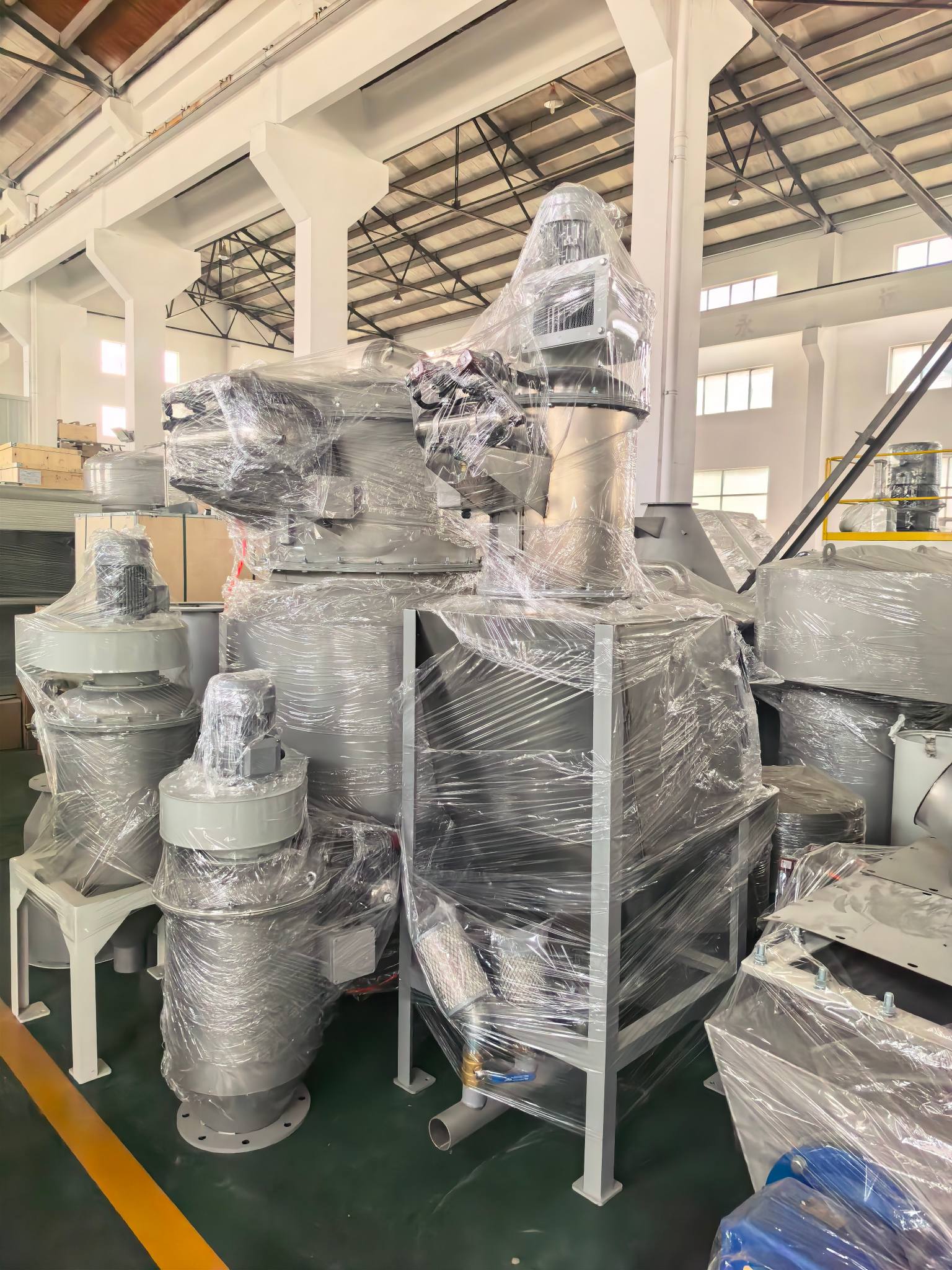
Most powder storage systems quietly consume far more energy than their rated specs suggest. The culprit often isn’t the blower or conveyor itself but the way air moves through the material. Once aeration begins, fine particles can shift from a settled, dense state into a fluid-like suspension. That transition changes the bulk density and internal friction almost instantly, forcing downstream equipment to work harder to maintain the same throughput.
Flow patterns inside a silo or hopper rarely match the neat diagrams in design manuals. In practice, many vessels develop funnel flow where a narrow channel empties first while surrounding powder stays static. This creates dead zones that require extra aeration to dislodge, and that extra air often escapes through the path of least resistance rather than doing useful work. The result is a repeating cycle of over-aeration, sudden collapse, and re-aeration that wastes compressed air and drives up operating costs.
A more effective approach is to match aeration intensity to the actual discharge pattern. By observing how the powder surface settles during draw-down and adjusting air pads or nozzles accordingly, operators can reduce unnecessary air injection. Even small reductions in aeration pressure can lower energy draw significantly across a 24-hour cycle, especially in plants running multiple storage vessels. The hidden drain isn’t usually one big fault; it’s the accumulated effect of poorly tuned air distribution over months of operation.
Why Coatings Matter More Than Steel Thickness in Corrosive Powder Environments
In powder handling systems, operators often assume that thicker steel walls equate to longer service life. Yet field data from chemical processing plants tells a different story. Bare steel, regardless of gauge, succumbs rapidly when fine corrosive particles embed in surface pores and initiate pitting. The real defense lies in a coating that isolates the substrate from direct contact with the powder bed. Without this barrier, even a 10 mm plate can perforate within months in environments rich in chlorides or acidic dust.
Coatings work by altering the surface chemistry, not just adding mass. A well-selected epoxy or polyurethane layer creates a low-energy surface that resists particle adhesion and moisture ingress. This prevents the formation of micro-galvanic cells that typically accelerate corrosion under compacted powders. In contrast, simply increasing thickness adds weight, cost, and fabrication complexity without addressing the root cause: interfacial attack at the steel-powder boundary. Engineers who prioritize coating integrity over plate thickness report up to four times longer maintenance intervals.
The economics further reinforce this principle. The cost per millimeter of additional steel is linear, while the performance gain is marginal once corrosion has initiated. A high-performance coating, though initially more expensive per square meter, reduces downtime and replacement frequency. For extreme environments—such as fertilizer storage or battery powder processing—the smart specification includes a sacrificial zinc-rich primer beneath a chemical-resistant topcoat, rather than a thicker monolithic steel shell.
Smart Level Monitoring: Cutting Downtime in Busy Chinese Processing Plants
Many busy Chinese processing plants still rely on manual checks to track material levels in tanks, silos, and hoppers. These spot inspections are easy to miss during shift changes or peak production hours, especially when operators are stretched thin. Smart level monitoring replaces guesswork with continuous sensor readings, giving teams a real-time view of inventory without walking the floor. This direct visibility removes the blind spots that often lead to sudden material shortages or overflows.
The real value comes from custom alarm thresholds that alert staff before levels reach a critical point. Instead of discovering a hopper is empty only when a conveyor starts running dry, the system can trigger a refill request at 20% remaining capacity. In a high-speed snack packaging line, this means no more emergency stops to replenish seasoning or packaging film. By catching the problem early, the line keeps moving and operators avoid the frantic last-minute scramble that often causes secondary errors.
Lower unplanned downtime translates directly into higher throughput and lower maintenance costs. When equipment isn't running empty or fighting to process inconsistent feed rates, wear and tear drop noticeably. For plant managers in China's competitive food and beverage sector, this stability makes it easier to schedule preventive maintenance during planned windows rather than reacting to breakdowns. The result is a smoother operation where labor is focused on quality control and line optimization, not firefighting level-related stoppages.
Modular Silo Networks: Scaling Capacity Without Halting Production
When a facility approaches its storage ceiling, the usual options involve shutting down lines, relocating inventory, or making do with temporary overflow. Modular silo networks sidestep that disruption entirely. Instead of one monolithic structure, the system links multiple smaller silos through shared conveyors and control logic. Each module can be filled, emptied, or isolated without touching the others, so production keeps running while extra capacity comes online piece by piece.
The real advantage shows up during expansions. A plant can start with two or three silos and add more as demand grows, tying them into the same material handling loop. Because every unit uses the same sensors, valves, and discharge protocols, the control system treats the whole network as a single flexible inventory. Operators can reroute product from a full silo to an empty one mid-shift, balance fill levels automatically, or pull a module offline for cleaning without losing buffer stock.
Maintenance and risk also improve. If one silo develops a bridge or a sensor fault, the network simply excludes that unit until repairs are done. There's no need to stop upstream processes or scramble for emergency storage. For operations that have been burned by adding capacity in a single massive jump, this incremental, non-disruptive approach often ends up being cheaper in the long run, because downtime never becomes part of the upgrade price.
Designing for Humidity: Moisture Barriers That Keep Powders Flowing
In powder handling, ambient humidity is often the quiet culprit behind caking, clumping, and erratic discharge. Rather than fighting moisture after it has already condensed inside a hopper or transfer line, the most effective designs place a moisture barrier directly at the boundary where humid air meets dry powder. This can mean a low-permeation liner, a sealed headspace, or a desiccant breather that strips water vapor before it ever reaches the material surface.
A well-designed barrier does more than block water vapor; it reshapes the microclimate around the powder. For hygroscopic materials like starches, salts, or fine pigments, even small fluctuations in dew point can bridge particles into cohesive clumps. Using nitrogen-purged headspace or multilayer films with an aluminum foil core keeps the powder's surface layer dry enough to remain free-flowing. The result is that screws and rotary valves can meter powders without the stop-start jamming that accompanies humidity spikes, and the discharge rate stays predictable even on muggy days.
The payoff shows up downstream in consistent dosing and fewer line shutdowns. When the barrier prevents moisture ingress at the source, operators spend less time breaking up hardened material in hoppers or chasing blockages in conveying lines. Some designs pair the moisture barrier with slightly steeper hopper walls and gentle vibratory assists, but it is the moisture control that keeps the powder flowing long after installation. In humid production environments, that boundary layer is not just a detail—it is the difference between a smooth-running process and a recurring maintenance headache.
FAQ
Industries such as cement production, fly ash handling, chemical processing, food and beverage manufacturing, and mineral processing commonly rely on these silo systems. They are valued for their ability to keep dry powders contained, reduce contamination risks, and support continuous production lines.
They minimize material loss during transfer, speed up loading and unloading cycles, and allow precise inventory control. By storing large volumes in a compact footprint, they cut down on manual handling and downtime, which directly boosts throughput.
Many systems include insulated panels, corrosion-resistant coatings, and reinforced support structures. These features help maintain powder flowability in humid or extreme temperature conditions, preventing clumping or bridging.
Yes, manufacturers often customize internal liners, aeration pads, and discharge mechanisms. Fluidization units or vibration-assisted hoppers are added to break up cohesive materials, while wear-resistant steel protects against abrasion.
Pressure relief valves, level sensors, temperature monitoring, and grounding systems are common. Dust collection units also reduce airborne particles, lowering explosion risks and keeping work environments safer.
Installation time varies based on capacity and site conditions, but modular designs often allow assembly within a few weeks. Prefabricated components and detailed engineering drawings reduce on-site welding and alignment work.
Absolutely. Manufacturers offer capacities ranging from a few cubic meters to thousands, with options for multiple discharge outlets, load cells, and PLC controls. Small batch users can choose simple hopper-bottom silos or integrated batching stations.
Regular inspection of welds and seals, cleaning of dust collector filters, checking aeration pads for wear, and calibrating level sensors help maintain performance. Scheduled discharge testing also prevents powder stagnation.
Conclusion
Chinese powder storage silo systems are moving away from conventional cylindrical designs as manufacturers experiment with hopper angles, internal baffles, and even asymmetric geometries to prevent powder bridging and rat-holing. These shape-driven changes reduce the need for manual intervention and keep discharge rates consistent. At the same time, aeration systems are being retuned—not just to fluidize powders, but to cut energy waste from over-aeration and poorly matched air distribution. Engineers now map flow patterns using pressure sensors and tracer studies, adjusting air pads and nozzle placement so energy goes where it actually helps. In corrosive environments, the focus has shifted from simply increasing steel thickness to applying advanced polymer or ceramic coatings that resist chemical attack, extending silo life without the weight penalty. This shift in material strategy is particularly visible in chemical and mineral processing plants across coastal provinces.
Smart level monitoring has become standard in busy Chinese processing facilities, with radar and guided-wave sensors feeding real-time data to centralized control rooms. Instead of scheduled maintenance, plants now receive alerts on unusual drawdown rates or compaction zones, cutting unplanned downtime by a significant margin. For growing operations, modular silo networks allow capacity to be added in phases—individual silos are linked through shared conveying and dust collection systems, so production continues while new units are installed. In high-humidity regions, designers integrate moisture barriers such as desiccant breathers, heated air sweeps, and vapor-tight seals to keep hygroscopic powders from clumping. These systems are no longer afterthoughts but core elements of efficiency, reflecting a broader shift toward reliability and continuous flow in China’s industrial storage infrastructure.
Contact Us
Contact Person: Darye WANG
Email: [email protected]
Tel/WhatsApp: 86-13501017897
Website: https://www.fcntd.com/