
China Outdoor Socks Manufacturer Shares Expert Tips for Choosing Durable and Comfortable Hiking Socks
2026-10-17
Blistered heels and soggy toes can turn a dream trail into a miserable march—yet most hikers overlook the one piece of gear that takes the worst beating. Fuli Socks, a leading China outdoor socks manufacturer, has spent years field-testing yarn blends, cushion zones, and toe seams to solve exactly that. Here, their experts skip the marketing fluff and share the practical checks you can use to pick hiking socks that stay comfortable mile after mile. If you’re done with mid-hike sock changes, this is where you start.
Why Merino Wool Outperforms Synthetics Over Long Miles
After hour six on the trail, synthetics start telling on you — that clingy, clammy film against your skin, the faint ammonia bite rising from your shirt. Merino wool doesn’t just delay that moment; it sidesteps the whole script. The fiber’s scaly outer layer wicks moisture away from the skin while the core actually absorbs vapor, pulling sweat into the wool where it can evaporate slowly without chilling you. That means your base layer stays dry to the touch long after a polyester blend would have turned into a sticky second skin.
Then there’s the odor factor, which matters more than most hikers admit. Bacteria love warm, damp synthetic fibers — they multiply fast and the smell locks in. Merino’s structure traps the byproducts of sweat inside the fiber itself, releasing them only when washed. You can wear the same merino shirt for a week of 20-mile days and still sit next to someone at a trailhead without apologizing. Try that with a synthetic and you’ll clear the bench.
Finally, merino regulates your microclimate in a way synthetics only imitate with mechanical tricks. It warms when wet, breathes when hot, and doesn’t break down into microplastic lint after repeated abrasion against pack straps. Over thousands of miles, that translates to fewer replacements, less stink, and a layer that feels less like gear and more like a second skin that actually belongs there.
The Sock Heel Test Most Hikers Overlook
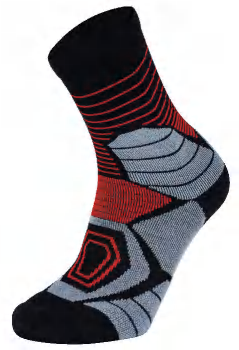
Most people tug on a fresh pair of hiking socks, wiggle their toes, and call it good. The part that actually dictates whether you'll limp into camp sits right at the bend of your ankle. Turn the sock inside out and look at how the heel pocket is shaped. If the seam cuts straight across instead of following the natural L-curve of your foot, that sock will shift and bunch after the first downhill mile.
A quick way to check is to slide your hand inside and press the heel fabric against your palm. It should feel slightly denser there than on the leg, not just printed with a different color. Then put the sock on and do a few deep knee bends. If the heel panel crawls more than a finger's width toward your arch, that pair is better suited for casual wear than a rocky traverse.
You can also test with your boots on. Lace up, walk ten steps, then pinch the back of the sock at your Achilles. There should still be a deliberate fold of fabric, not a taut, stretched patch. That small bit of slack is what keeps the heel cup from rubbing you raw by hour three. It's a simple check, but it saves more feet than most expensive insoles ever will.
Cushioning Zones That Protect Without Adding Bulk
The secret lies in strategic placement rather than sheer volume. Instead of lining the entire shoe with foam, designers carve out targeted pockets under the heel and forefoot—the two areas that absorb the most impact. These zones compress on landing to dissipate shock, then spring back quickly to keep transitions smooth. You get the sensation of plush support exactly where you need it, while the rest of the midsole remains low and responsive.
What sets this approach apart is how it handles weight. Traditional bulky cushioning adds grams everywhere, which can slow you down over long miles. By isolating the protective layers, the shoe keeps its overall profile sleek. The result feels light on the foot but never sacrifices that guarded, confident stride—especially on hard pavement or uneven trails where joints take a beating.
Look for shoes that pair these zones with a firmer perimeter. The edges stay stable for lateral movements, while the center cushions soften the blow. It’s a balance that feels natural from the first step: no break-in period, no clunky feel, just the quiet assurance that your feet are protected without carrying extra heft up the hills.
How Seam Placement Prevents Blisters Before They Start
Most blister prevention advice focuses on what happens after friction has already done its damage. But the real answer starts earlier—at the point where fabric meets skin. Seam placement is one of the few design choices that works before you even take a step. When a seam sits directly over a high-friction zone like the heel, toe knuckles, or the outside edge of the foot, every stride turns that ridge of stitching into a slow saw. Moving the seam just a few millimeters off that pressure line changes the story completely. The fabric can flex without dragging, skin stays cooler and drier, and the hot spot never gets a chance to form.
The trick is knowing which seams matter. A sock with a bulky toe seam folded flat across the top of your toes can feel fine for the first mile, then become unbearable by mile four. Socks designed with a flat, hand-linked seam that curves away from the natural bend of the toes remove that pressure point entirely. The same logic applies to running tights, hiking socks, and even the inner lining of boots. Flatlock stitching, offset toe seams, and seamless heel pockets are not just marketing terms—they physically reduce the amount of raised fabric that can rub. The less texture there is against your skin, the fewer opportunities for shear force to build.
What makes this approach so effective is that it treats blisters as a design problem, not a personal failing. You don’t need to toughen up your skin or carry six types of tape. You just need gear that respects the way your foot actually moves. Next time you buy socks or shoes, turn them inside out and run a finger along the seams. If you can feel a ridge pressing into your fingertip, imagine what it will do after ten thousand steps. Choose the option with the least intrusion in your usual hot spots. That small difference in construction is often the only thing standing between a long, comfortable day and a blister that started before you even left the house.
When Thicker Socks Backfire on Rocky Terrain
Thick socks might seem like a smart choice for rocky trails, but the extra cushioning ends up dulling the signals your feet rely on. Without that ground feedback, you're more likely to misjudge edges and step down with too much force, which then travels up through your ankles and knees.
Another issue is fit. Bulky socks take up space inside the shoe, so your toes have less room to spread and your foot can slide around just enough to create friction. Over sharp, uneven rock, that small movement becomes a blister or a hot spot, especially at the heel and the ball of the foot.
If the terrain is loose and uneven, try a medium-weight sock with a close fit instead. Your feet need to read the surface as much as they need padding. Save the thick pair for smooth, well-worn trails where the ground doesn't fight back.
The Simple Washing Habit That Extends Sock Lifespan
Most people toss their socks into the wash without a second thought, but turning them inside out before they hit the water makes a surprising difference. The inside of a sock collects dead skin, sweat, and body oils—exactly the stuff that breaks down fibers over time. When the inner surface faces outward, detergent and agitation can reach those residues directly, reducing the gradual wear that causes thinning at the heel and toe. It also prevents lint and hair from clinging to the outside, so your socks come out looking less tired after each cycle.
Another easy shift is ditching the hot water and high-heat dryer setting. Heat is rough on elastic and cotton blends; it weakens the stretch that keeps socks hugging your feet without sagging. A cold or warm wash with a gentle cycle, followed by air drying or a low tumble, preserves the yarn structure far longer. If you must use a dryer, take socks out while they are still slightly damp and let them finish drying flat—this keeps the cuffs from curling and the fabric from stiffening.
Finally, skip the fabric softener on sock loads. Softeners leave a coating that reduces absorbency and makes fibers more prone to pilling, which shortens the useful life of everyday socks. Instead, add a half cup of white vinegar to the rinse cycle once in a while. It removes soap buildup, neutralizes odors, and leaves the fibers soft without any residue. Pair that with washing socks in a mesh bag to minimize friction against heavier items, and you will notice the pairs you love outlasting the ones you treated carelessly before.
FAQ
A high nylon content is non-negotiable—aim for 20% to 30% nylon in the wear zones. Merino wool handles moisture and odor well, but it needs that nylon reinforcement at the heel and toe. Some mills also use a bit of elastane throughout the leg to prevent the sock from slouching into your boot, which is a common cause of premature wear.
Targeted cushioning beats a fully padded sock. You want dense terry loops under the forefoot and heel, but a thinner knit on the instep and around the ankle so the boot still fits properly. If you're wearing a close-fitting boot, a medium cushion with a flat toe seam will keep your foot from sliding while still absorbing impact on descents.
Height is mostly about protection. Crew-length socks stop debris and brush from getting inside, and they protect your lower leg from boot collars that rub. Quarter socks are fine for well-maintained trails with low-cut shoes, but if you're hiking through scree or thick vegetation, go taller. It's not about looks—it's about keeping grit out of your boots.
Yes. Look for a hand-linked or flat toe seam; a bulky seam will chew up your toes on long descents. Good hiking socks also use a reinforced heel pocket and a ribbed arch band that keeps the sock from shifting. Reverse terry panels on the shin and calf aren't just decorative—they add breathability where you don't need padding.
Wash them inside out in cold water and skip the dryer whenever possible. The dryer's heat breaks down elastane and makes wool fibers brittle. If you must machine dry, use the lowest heat setting and take them out while still slightly damp. Avoid fabric softeners—they coat the fibers and reduce both breathability and the sock's ability to wick moisture.
Buying the same size as their street shoes. Hiking socks are thicker, and if they're too small, the heel pocket sits under your arch and the toe seam presses into your toes. That friction is what leads to blisters. Always match the sock size to your actual foot length in the brand's chart, not your shoe size, and don't assume one size fits all.
A well-built sock reduces the two things that cause blisters: friction and moisture. A snug arch band and a proper heel pocket stop the fabric from bunching, while merino or synthetic blends move sweat off your skin. It's not magic—if your boots don't fit, no sock will fix that—but a sock with a slick inner face and targeted cushioning lowers the risk significantly.
The price usually reflects the yarn blend, the number of reinforcement zones, and the knitting machine time. Cheap socks use more acrylic or basic cotton blends and skip the arch band or flat toe seam. Premium socks use longer-staple merino, higher nylon content in the heel and toe, and sometimes a two-layer construction with a smooth inner face. You're paying for durability, not just a brand name.
Conclusion
On long hikes, fabric choice matters more than most hikers realize. Merino wool consistently outperforms synthetics because it manages moisture, resists odor, and regulates temperature across changing conditions. But even the best yarn fails if the construction ignores key stress points. A simple heel test—pinching the fabric at the back of the foot to check for dense, flat knitting—reveals whether a sock will bunch or slip inside your boot. Add targeted cushioning zones under the forefoot and heel, and you get protection without the bulky feel that throws off your stride. Seam placement is equally critical: flat, hand-linked toe seams sit away from pressure points, stopping blisters before they start.
Many hikers assume thicker equals tougher, but on rocky terrain that logic backfires. Overly padded socks create extra volume that shifts the foot inside the boot, increasing friction and reducing ground feel. Instead, look for medium-density knit with reinforced nylon in high-wear areas. Finally, extend the life of any good pair by washing them inside out in cold water and skipping the dryer. Heat breaks down elastic and merino fibers faster than trail miles do. Rinse off grit after each hike, and the socks will keep their shape and cushioning far longer than expected.
Contact Us
Contact Person: Ryan Li
Email: [email protected]
Tel/WhatsApp: +86 13757342500
Website: https://www.fulisocks.com/