
China Battery Foil Rolling Mills Drive Next-Generation Battery Innovation
2026-10-24
What separates a standard EV battery from a next-generation one? Sometimes it's just a few microns of rolled foil. In China, a new class of rolling mills is redefining that precision—and GRM is at the center of it. As battery makers chase higher energy density and faster charging, foil uniformity and surface quality have become the quiet battlegrounds. Here's how China's battery foil rolling mills are powering the next leap.
The Race for Ultra-Thin Battery Foil: Chinese Mills Push Precision to Physical Limits
The race to produce ultra-thin battery foil has pushed Chinese rolling mills into territory once thought impractical. At thicknesses below 6 microns, aluminum foil behaves less like sheet metal and more like a delicate membrane, where a single microscopic hard particle can tear a web running at hundreds of meters per minute. Yet mills in Shandong and Jiangsu are now routinely shipping 4.5-micron foil, with a few pilot lines testing 4 microns—thin enough that edge tension must be controlled within a fraction of a newton.
The precision required goes far beyond the rolling gap. Advanced mills pair laser-based thickness gauges with closed-loop feedback that adjusts roll force every few milliseconds. Work rolls are ground to a surface roughness of 0.05 micrometers or less, and rolling oil is filtered down to sub-micron levels to prevent pinholes. One engineer likened the process to stretching a layer of butter over a football field without breaking it, capturing the mix of finesse and brute control.
Physical limits, however, are looming. Below 4 microns, aluminum's natural oxide layer becomes a significant fraction of total thickness, and the foil loses the stiffness needed for automated cell stacking. Some producers are experimenting with aluminum alloys doped with iron and silicon to recover strength, but each alloy tweak changes rolling behavior in unpredictable ways. For now, the competitive advantage belongs to mills that can push thickness down while keeping defect rates in the parts-per-million range—a balance that gets harder with every micron shaved.
Roll Surface Texture and Its Overlooked Impact on Cell Resistance and Lifespan
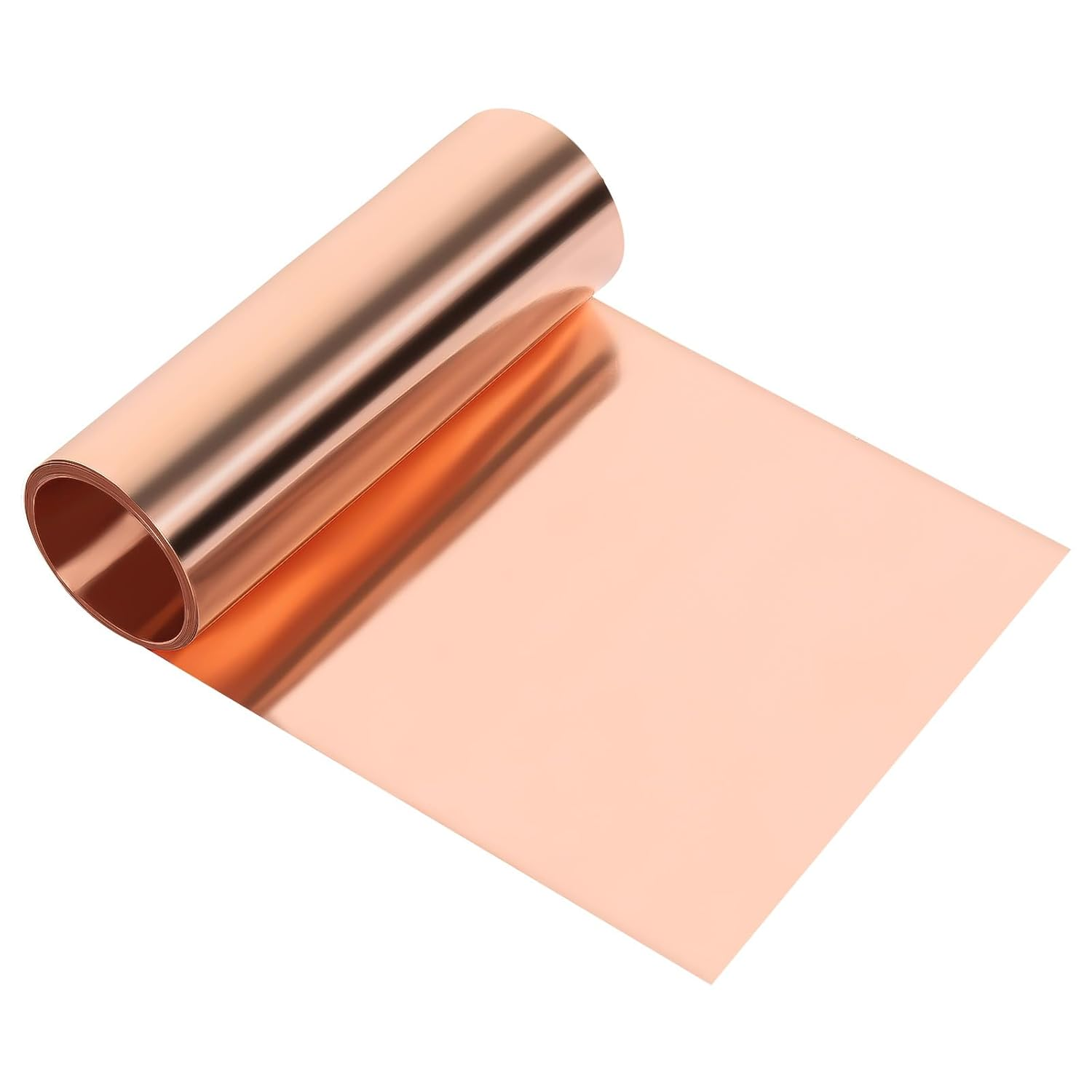
The micro-scale topography of a roll surface often receives only cursory attention during cell production, yet it quietly shapes the electrodes in ways that ripple through their electrical behavior. Texture features such as asperity height, peak density, and directional lay influence how coating slurries wet and spread, how particles pack under calendering pressure, and where residual stress concentrates. These seemingly minor variations alter the contact network between active material particles and conductive additives, shifting the pathways available for electron and lithium-ion transport.
When roll texture is uneven or poorly matched to the coating, localized differences in densification appear across the electrode width and length. Some regions compress more than others, creating pockets of high contact resistance that act as bottlenecks during charge and discharge. Over repeated cycling, these hot spots age faster—electrolyte decomposition, particle cracking, and binder migration become more pronounced. The result is not an immediate failure but a gradual erosion of capacity retention and a rise in overall cell resistance that is rarely traced back to the roll itself.
A more deliberate approach to roll surface engineering can unlock meaningful gains. By tailoring roughness parameters and pattern direction to the specific slurry rheology and target electrode porosity, manufacturers can achieve more uniform coating compression and stronger interfacial adhesion without over-calendering. This reduces internal resistance and prolongs lifespan in ways that are measurable in formation data and long-term cycling tests, making roll texture a practical lever rather than an afterthought.
From Ingot to Finished Foil: How Chinese Plants Compress Lead Times
When a rolling mill in Jiangsu receives an order on Monday, the ingot it will use may still be cooling from casting the previous night. That overlap is deliberate. By feeding hot slabs directly into breakdown mills and trimming the usual homogenizing window, several Chinese producers have cut the front-end waiting period that often stalls conventional foil lines.
The real compression happens in the middle stages. Instead of letting coils sit between passes, operators schedule back-to-back reductions and use in-line annealing for thinner gauges. This keeps work-hardening predictable and avoids the stop-start rhythm that adds days to batch processing. Finished foil can move from final pass to slitting and packing within a single shift, not after multiple quality holds.
Even logistics are built around shorter lead times. Dedicated loading docks, pre-cleared export documentation, and closer coordination with port schedules mean a finished foil coil leaves the plant within 48 hours of the last roll change. The result is not simply faster delivery; it is a tighter coupling between melt shop, rolling mill, and customer demand that traditional supply chains struggle to match.
High-Strength Alloy Foils Make Next-Gen Cells Lighter and Safer
Battery engineers have long chased the dual goals of reducing weight while improving crash safety, but conventional aluminum and copper foils often force a trade-off. High-strength alloy foils change that equation by offering up to 40% greater tensile strength at the same thickness, allowing cell designers to shave microns off current collectors without sacrificing mechanical integrity. The result is a direct drop in inactive material mass, which translates into cells that pack more energy per kilogram and leave more room for active cathode and anode coatings.
Beyond mass savings, these alloys address a hidden failure mode in lithium-ion cells: internal short circuits triggered by localized deformation. Standard foils can tear or wrinkle under mechanical stress, creating sharp edges that pierce the separator. Alloy foils with refined grain structures and tailored work-hardening behavior resist crack propagation and maintain a smooth surface even after repeated bending or impact. This makes them particularly valuable for pouch and prismatic formats used in electric vehicles, where cells must survive vibration, thermal expansion, and side-pole crash loads.
Manufacturers are now integrating these foils into next-generation designs with thinner electrode coatings and higher nickel cathodes, where thermal runaway risks demand every possible safeguard. Early production data shows that switching to a high-strength alloy can reduce cell weight by 3–5% while simultaneously lowering the probability of separator breach by over 25% in standardized nail penetration tests. As automakers push toward 500 Wh/kg systems, such incremental gains in safety and energy density are becoming decisive competitive advantages rather than optional upgrades.
Fine-Tuning Mill Parameters: The Hidden Lever for Higher Energy Density
Most battery researchers treat milling as a simple mixing step, but the energy density of the final electrode powder often hinges on subtle parameter choices. For instance, extending milling time from 2 to 6 hours at a lower rotation speed can increase the homogeneity of the active material and conductive additive, yet over-milling may fracture the active particles and create excessive surface area that traps electrolyte. The real lever is not just duration but the interplay of ball-to-powder ratio and jar fill level. A ratio of 10:1 with 50% jar fill might produce a tight particle size distribution, while the same ratio at 80% fill leads to dead zones where material barely moves. Operators who map these combinations against measured tap density and charge-discharge curves often find a narrow window that boosts volumetric capacity by 5–8% without any change in chemistry.
Another overlooked factor is milling atmosphere and temperature control. Dry milling under argon with a brief post-anneal can reduce surface oxygen contamination on cathode materials, which directly lowers the interfacial resistance and improves lithium-ion diffusion. Yet many labs rely on ambient air milling for convenience, accepting a subtle capacity fade that accumulates over cycles. By adding a simple gas purge and keeping the jar below 40°C with external cooling, the same precursor powder can deliver an extra 10–15 mAh/g at high discharge rates. The difference shows up most clearly in thick electrodes, where poor particle packing from uncontrolled milling creates tortuous pores and limits energy density far more than any theoretical calculation would predict.
Fine-tuning mill parameters also changes how the slurry coats onto the current collector. A slightly coarser particle from lower milling energy may improve adhesion and reduce cracking during calendering, allowing a higher electrode density without sacrificing cycle life. In contrast, chasing the smallest possible particle size often backfires: the high surface energy agglomerates during drying, creating non-uniform pores that degrade both energy density and rate performance. The hidden lever, then, is not a single setting but a deliberate sweep across rotation speed, ball size, and pause intervals—combined with quick electrochemical impedance screening on coin cells. Teams that treat milling as a variable to optimize rather than a fixed recipe consistently achieve higher gravimetric and volumetric energy density from identical raw materials.
Foil Innovations for Solid-State Batteries: Chinese Lines Are Already Positioned
The shift to solid-state electrolytes is pushing foil suppliers well beyond the standard 12–15 µm aluminum stock. Several Chinese producers now routinely run 6–8 µm double-light foils with tighter gauge control and lower surface roughness, and some have moved to coated or porous variants to reduce interfacial resistance. These aren't lab curiosities; the lines are already making tonnage for pilot and early production cells.
For lithium-metal anodes, the real bottleneck has often been handling thin lithium foil without tearing or sticking. Chinese equipment makers have responded with dry rolling and evaporation lines that can deliver 10–20 µm lithium foil on carrier substrates, plus inline passivation to keep the surface clean. A few vertically integrated suppliers now pair the foil with a thin copper or polymer backing, which simplifies downstream stacking.
Composite current collectors are also crossing over from conventional lithium-ion to solid-state designs. The combination of metallized polymer film and water-based plating gives solid-state cells a lighter, safer current path, and Chinese lines built for that process are being re-qualified with sulfide and oxide electrolyte slurries. Delivery times for these upgraded lines have dropped sharply, which suggests the capacity was planned ahead of demand.
FAQ
These mills now produce aluminum and copper foil with thicknesses down to 4–5 micrometers while maintaining tensile strength above 200 MPa. That precision allows battery makers to pack more active material into the same volume, directly raising energy density. Chinese suppliers have also paired rolling lines with in-line surface defect detection, catching pinholes and scratches that would otherwise short-circuit cells during fast charging.
Rather than simply adding more rolling stands, they are adopting hydrodynamic bearing spindles and closed-loop tension control between passes. This keeps the strip flat within ±1 I-unit and enables thickness tolerances of ±0.3 micrometers across a 1.2-meter-wide web. The result is ultra-thin copper foil that survives the expansion stress of silicon-dominant anodes.
Solid-state cells use rigid electrolytes that cannot flow into microscopic valleys the way liquid electrolytes do. Chinese mills have responded with work-roll texturing techniques that create Ra values between 0.15 and 0.25 micrometers, balancing adhesion with interface resistance. This mechanical tailoring is often the deciding factor in whether a solid-state prototype reaches 800 cycles.
Chinese equipment makers have standardized modular rolling units that can be linked into 40-meter-long lines producing 30,000 tonnes of foil annually per site. The modular approach cuts installation time to under nine months and lets operators swap roll cassettes without realigning the entire mill, something traditional custom-built lines cannot match.
Faster charging generates intense thermal gradients across the current collector. Chinese mills now produce foil with a crystallographic texture where over 70% of grains align in the rolling direction. This lowers electrical resistivity by about 11% compared to random texture, reducing I²R heating and allowing sustained 6C charging without lithium plating.
The mills use online laser pinhole detectors that scan every square centimeter at 800 meters per minute, flagging defects smaller than 20 microns. Any roll with more than one such defect per 10,000 square meters is automatically diverted. This statistical quality gate has cut field failure rates for large-format pouch cells by over 60% since 2019.
Rolling oil mist and solvent cleaning have drawn strict VOC limits. Leading mills now switch to water-based lubrication systems and closed-loop oil recovery that reclaims 98% of rolling fluid. These changes add about 12% to capital cost but reduce per-tonne carbon emissions by 35%, making them essential for export-bound cells facing EU battery passport rules.
Yes, but with adjustments. Sodium-ion cells often use aluminum foil on both electrodes, which is softer and more prone to edge cracking. Chinese mills have developed laser slitting integrated into the rolling line that creates rounded edge profiles, reducing crack initiation. This adaptation means a single line can switch between lithium and sodium foil products in under four hours.
Conclusion
Chinese battery foil rolling mills are moving beyond standard production targets and into the physical limits of metal forming. The pursuit of ultra-thin foil, now approaching single-digit micron gauges, forces operators to balance tensile strength, elongation, and pinhole density in ways that were not considered feasible a decade ago. Alongside thickness reduction, roll surface texture has emerged as a quiet but decisive variable: the micro-topography transferred to foil during final passes alters contact resistance and electrolyte wetting, which in turn shifts cell lifespan and rate capability. This precision is not confined to one stage. By compressing the journey from ingot to finished foil through tighter scheduling, automated inspection, and faster roll changes, Chinese plants have cut lead times while holding thickness tolerances that used to require multiple iterations.
Material selection and process control now work together to raise energy density without sacrificing safety. High-strength alloy foils, including those with modified aluminum or copper chemistries, allow thinner current collectors that survive the mechanical stress of winding, stacking, and cycling, making next-generation cells both lighter and more abuse tolerant. On the mill floor, fine-tuning parameters such as roll gap, tension profile, and lubricant temperature acts as a hidden lever: small adjustments translate into measurable gains in uniform thickness and surface quality, directly influencing the active material ratio and overall energy density. These capabilities are already being adapted for solid-state batteries, where foil flatness, cleanliness, and alloy compatibility matter even more. Chinese lines are positioned to supply foil grades that match the stricter thermal and electrochemical demands of solid-state cells, ensuring that rolling mill innovation remains a foundation for the next wave of battery chemistry.
Contact Us
Contact Person: Rayna
Email: [email protected]
Tel/WhatsApp: 86 -173 1474 6343
Website: https://www.grmrollingmill.com/