
Advanced Plywood Die Board Laser Cutting Machine: Transforming Die Making with Precision and Speed
2026-09-25
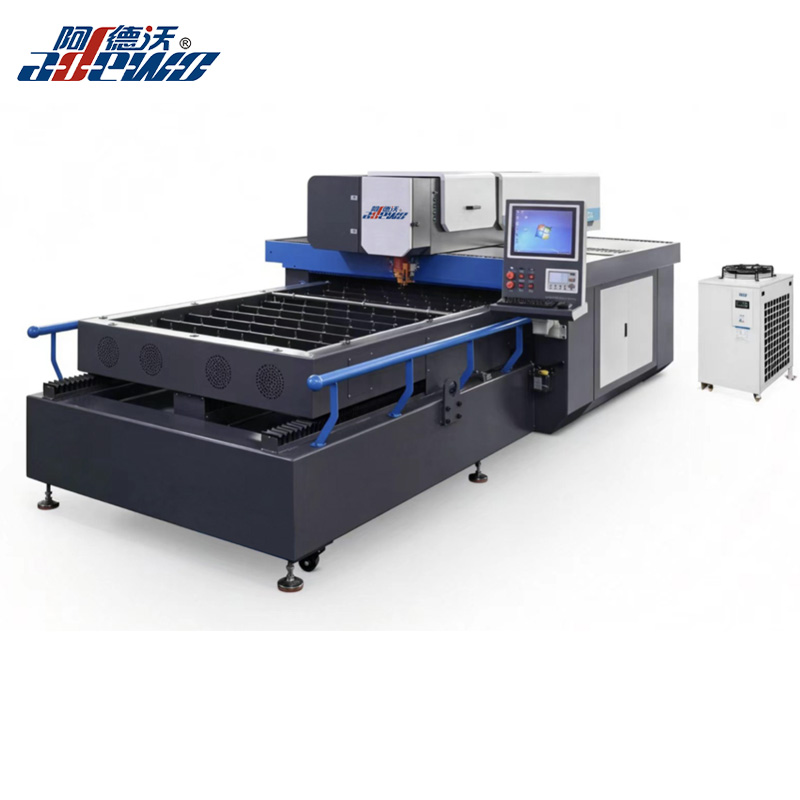
Die making has long been a bottleneck—until now. The advanced plywood die board laser cutting machine from ADEWO is transforming the trade with a level of precision and speed that traditional methods can't touch. Curious how a single upgrade can cut hours off your workflow and eliminate rework? Here's what that means for your shop.
How Laser Cutting Eliminates Warping and Edge Fray on Thick Plywood Die Boards
If you've ever cut thick plywood with a jigsaw or a CNC router, you know the usual headaches: the board starts to lift at the corners or the edges come out fuzzy with torn fibers. That happens because most mechanical cutting methods push against the wood and generate a fair amount of friction heat. A laser doesn't do either. The beam simply evaporates material in a very narrow path, so the plywood never gets shoved around or heated unevenly across its thickness. That keeps flat panels flat, even when you're working with large die boards that would otherwise curl after being cut.
Edge fray is also tied to the way blades interact with the grain. When a bit or saw tooth catches a soft layer at the wrong angle, it rips out chunks instead of leaving a clean line. A laser cuts by turning solid wood directly into gas and fine ash, which means there's nothing left to fray. The edge ends up slightly caramelized and sealed, which actually helps preserve the shape of narrow bridges and intricate slot patterns. Adjusting the focal point and cutting speed for the specific plywood grade gives you a crisp edge without burning the face veneer, so the finished die board doesn't need a secondary sanding pass.
Feed Rates and Kerf Widths: Where Laser Cutting Outperforms CNC Routing
When you look at the numbers, the difference is stark. Lasers can sustain feed rates that would snap a router bit or tear through softer materials. A CO2 laser, for instance, glides through acrylic at 20–30 mm/s on a mid-range machine, while a CNC router pushing the same material often bogs down to half that speed to avoid melting or chipping. It's not just about raw velocity either—the laser's lack of physical contact means no tool deflection, so the cut stays true even when you crank up the speed. CNC routing has to balance rpm, chip load, and tool wear, which effectively caps how fast you can move before quality falls apart.
Kerf width is where things get really interesting. A typical router bit might leave a slot anywhere from 1.5 mm up to 6 mm wide, depending on the bit diameter. That's a lot of wasted material and it forces you to design parts with larger gaps. A focused laser beam, on the other hand, can produce a kerf as narrow as 0.1 mm—sometimes tighter if you're using a high-quality lens and a small nozzle. For intricate inlays, snap-fit joints, or anything with tight tolerances, that thin line makes a massive difference. You can nest parts closer together, reducing scrap and getting more yield per sheet.
There's also a subtle advantage people don't talk about much: the heat-affected zone on a well-tuned laser is tiny compared to the mechanical stress a router imposes. Routing tears fibers, leaves burrs, and can crack brittle materials. Laser cutting vaporizes material cleanly, and that narrow kerf means less heat spreads into the surrounding area. So you get cleaner edges, minimal post-processing, and the ability to cut geometries that would destroy a router bit—like razor-thin fins or extremely sharp internal corners. Feed rate and kerf width together aren't just specs on a datasheet; they're the real reason laser cutting wins on precision jobs.
Clean Slots Without Sanding: The Air Assist and Focus Optics Behind It
Cutting a clean slot usually means reaching for sandpaper afterward, but that step disappears when the air assist and focus optics are dialed in properly. The air stream pushes molten material out of the kerf before it can resolidify along the edges, so you are left with a crisp opening instead of a rough, glazed rim.
Focus optics play an equally important role. A tightly focused beam with the correct focal point keeps the cut width consistent from top to bottom, reducing taper and minimizing heat spread. When the nozzle distance and air pressure are matched to the material thickness, the slot comes out smooth enough to skip any manual cleanup.
Holding Tight Tolerances Across Full-Sheet Die Board Layouts
Maintaining tight tolerances across a full-sheet die board demands more than just precise cutting equipment—it requires accounting for how the sheet behaves as a whole. Variables like material expansion from humidity, inconsistent laser kerf across the sheet, and cumulative positional drift between cavities can quietly push finished dimensions beyond acceptable limits. The most common failure point isn't the cutting head itself, but the assumption that a single calibration at the sheet origin will hold true at the far corner.
A practical approach is to treat the sheet as a grid of zones rather than one continuous surface. By measuring and applying localized compensation factors for each zone, you can absorb small variations in material movement and cutting dynamics before they become visible defects. This often means adjusting laser power or speed slightly in denser areas where heat buildup is greater, and re-sequencing cuts so that internal stress releases in a controlled order instead of warping the sheet mid-process.
Verification should be built into the workflow, not left as an afterthought. Laser-etched fiducials at known intervals give immediate feedback on how the sheet has shifted, and quick spot checks with a calibrated microscope or vision system can confirm that hole positions and bridge widths remain within spec. Operators who log these measurements over time can identify drifting patterns—such as a recurring offset in the third quadrant—and adjust compensation tables before tolerance issues ever reach the final product.
Cutting 18 mm Birch Plywood in a Single Pass Without Delamination
Handling 18 mm birch plywood in one pass without delamination starts with blade choice. A 60-tooth or 80-tooth alternating top bevel (ATB) blade with a negative or low positive hook angle shears the veneer fibers cleanly instead of lifting them. If you have only a standard 40-tooth combination blade, you're asking for tear-out. Run the blade on a saw with a zero-clearance insert—this supports the bottom veneer right up to the kerf. Before cutting, lay a strip of painter's tape along the cut line on both faces. It holds the wood fibers in place and peels off without residue.
Set the blade depth so the teeth clear the underside by no more than 5 mm. Too much blade exposed increases tear-out and vibration. Feed the plywood at a steady, deliberate pace—hesitation or sudden force creates heat and micro-chipping. If you're using a circular saw or track saw, clamp a straightedge and keep the saw base flat. For a table saw, use a riving knife and push the sheet through without pausing. A light scoring pass with a sharp utility knife along the cut line before the main pass can rescue a dull blade, but with the right blade it's usually unnecessary.
On a CNC router, use a compression bit or a down-cut spiral bit sized for a single full-depth pass. A compression bit's up-cut tip pulls the bottom veneer inward while the down-cut flutes push the top veneer down, eliminating fuzz on both faces. Set the feed rate around 3 to 4 meters per minute and the spindle speed near 18,000 RPM as a starting point, then adjust based on chip size. Always support the sheet fully on a sacrificial board. Test on an offcut first—even a few millimeters of adjustment in speed or depth can mean the difference between a crisp edge and a peeled layer.
Why Die Shops Are Replacing Mechanical Cutting with Laser-Only Workflows
Walk into any modern die shop and you'll notice the old rhythm of punches, shears, and grinding wheels has gone quiet. Mechanical cutting used to dominate because lasers were too slow or too imprecise for thick tool steel. That balance has shifted. Fiber and disk lasers now slice through hardened D2 and A2 at speeds that make bandsaws look like museum pieces, and the kerf is so narrow that the scrap bin barely fills up. Shops are pulling out their old mechanical cutters not because they stopped working, but because every hour they run costs more in labor, coolant, and secondary finishing than a single laser pass.
The switch isn't just about raw speed. Mechanical methods leave burrs, warpage, and micro-cracks that force extra steps before heat treating or wire EDM. A laser-only workflow eliminates those cleanup operations almost entirely. One operator can load a sheet, hit a program, and walk to the next job while the beam does the layout, hole piercing, and contour cutting in a single setup. That kind of unattended run time changes the economics of small-batch die work—no more stacking tolerances from three different machines, just one cut path that matches the CAD file within a few thousandths.
There's also a quiet rebellion against hidden costs. Blades dull, punch tooling chips, cutting fluids need disposal, and every mechanical step invites a new setup error. Laser-only workflows strip those variables away. The beam never gets dull, the focal point doesn't wander, and the only consumable is electricity plus an occasional lens cover. For die shops running thin margins on tight deadlines, that predictability is worth more than the machine payment. The old arguments—lasers can't handle thick stock, cut quality suffers at high feed rates—have been answered by better resonator design and adaptive optics. What remains is a simple truth: the mechanical cutting floor is becoming optional.
FAQ
The beam is focused to a very small spot and guided by CNC motion, so kerf width stays consistent and corners come out sharp. There is no mechanical pressure on the plywood, which prevents the tearing and edge fraying common with rotary tools.
Yes, it is built for that. The laser source and assist gas are tuned to cut through dense plywood cleanly, and the bed design supports large sheets without vibration. Many shops run birch and maple plywood up to 18 mm or more, depending on wattage.
In most layouts it is substantially faster because the beam does not need bit changes and the bridge moves quickly between cut lines. Complex slot patterns that take hours by hand or router can often be finished in under half the time, though exact gains depend on part geometry.
A properly tuned machine leaves only light discoloration, not heavy char. The cut edges stay smooth and the slot width remains uniform, so rule seats snugly without extra filing. Adjusting power, speed and air assist controls the heat-affected zone.
Daily checks involve cleaning the lens or protective window, emptying the slag tray and making sure the air assist is dry. Weekly you inspect belts, rails and mirrors if it is a CO2 system. The chiller and exhaust filters also need periodic attention so the beam stays stable.
Not really. Most machines work from standard CAD files, and the nesting software handles sheet layout automatically. Once a job is loaded, the machine references the sheet and begins cutting. Changeover is mostly loading a new file and swapping the plywood sheet.
Packaging and corrugated box makers are the biggest users because they need folding carton and corrugated dies constantly. Label and gasket converters also use it, along with any shop producing steel rule dies for kiss cutting, creasing or embossing.
Look at the laser tube or source warranty, the rigidity of the gantry, the quality of the motion system, and whether the supplier offers local support. Bed size, maximum cutting speed and software compatibility with your existing CAD system matter more than raw wattage alone.
Conclusion
Laser-only workflows in die board production have moved from experimental to standard for shops that refuse to keep fighting material defects. Thick plywood—especially 18 mm birch—responds poorly to mechanical routing: heat and pressure cause warping, edge fray, and hidden delamination that shows up after the die is in use. The advanced plywood die board laser cutting machine sidesteps these failures by using a non-contact beam with carefully managed focus optics and air assist. The result is clean slot walls that need no sanding. Feed rates and kerf widths are not just competitive with CNC routing; they beat it in most full-sheet layouts, because the laser does not push or tear the wood fiber.
Perhaps more important for production managers is the tolerance story. Holding tight dimensions across an entire sheet of birch plywood no longer means stopping mid-job to compensate for drift or blade wear. The laser's repeatability comes from physics, not operator judgment. Cutting 18 mm material in a single pass without delamination is now common practice, which eliminates secondary trimming and rework. That is why die shops are increasingly removing mechanical cutting steps altogether. The workflow becomes simpler: import the file, cut, and move straight to rule insertion. Fewer variables, fewer rejected boards, and a faster path from sheet to finished die. The machine doesn't just speed up cutting; it changes what a die shop can promise its customers.
Contact Us
Contact Person: KAELYN LEE
Email: [email protected]
Tel/WhatsApp: +86 15012673758
Website: https://www.china-adewo.com