
Active Valve Factory Sets New Standards in Valve Manufacturing
2026-10-26
Valve manufacturing has long been a game of incremental gains—slightly better seals, marginally tighter tolerances. Then AVM stepped in and changed the rules entirely. With its Active Valve Factory, the company isn't just tweaking the status quo; it's redefining what a modern valve plant can achieve. From real-time process control to zero-defect workflows, AVM's approach raises a bold question: have we finally reached the end of 'good enough' in industrial valve production?
Rethinking Valve Design from the Ground Up
Most valve designs inherit decades of incremental tweaks—slightly better seals, marginally smoother actuators—without ever questioning the core geometry. Starting from zero means asking why the flow path looks the way it does, whether the seat must be circular, and if the stem really needs to sit in the middle of the stream. These aren't cosmetic questions; they change how pressure drops, how debris collects, and how maintenance actually happens in the field.
A ground-up approach also forces a hard look at material pairings. Instead of accepting stainless steel and PTFE as defaults, you can test ceramic-coated spools against engineered polymers, or rethink the sealing interface as a flexure rather than a sliding contact. The result is often fewer parts, tighter tolerances where they matter, and a valve that behaves predictably after thousands of cycles—not just on day one.
Field feedback shapes the next iteration in weeks rather than years because the architecture isn't locked into legacy tooling. Small production runs reveal failure modes early, letting engineers adjust the internal contours without scrapping an entire product line. That kind of agility is rare in an industry accustomed to decade-old catalogs.
The Material Science Behind Longer-Lasting Valves
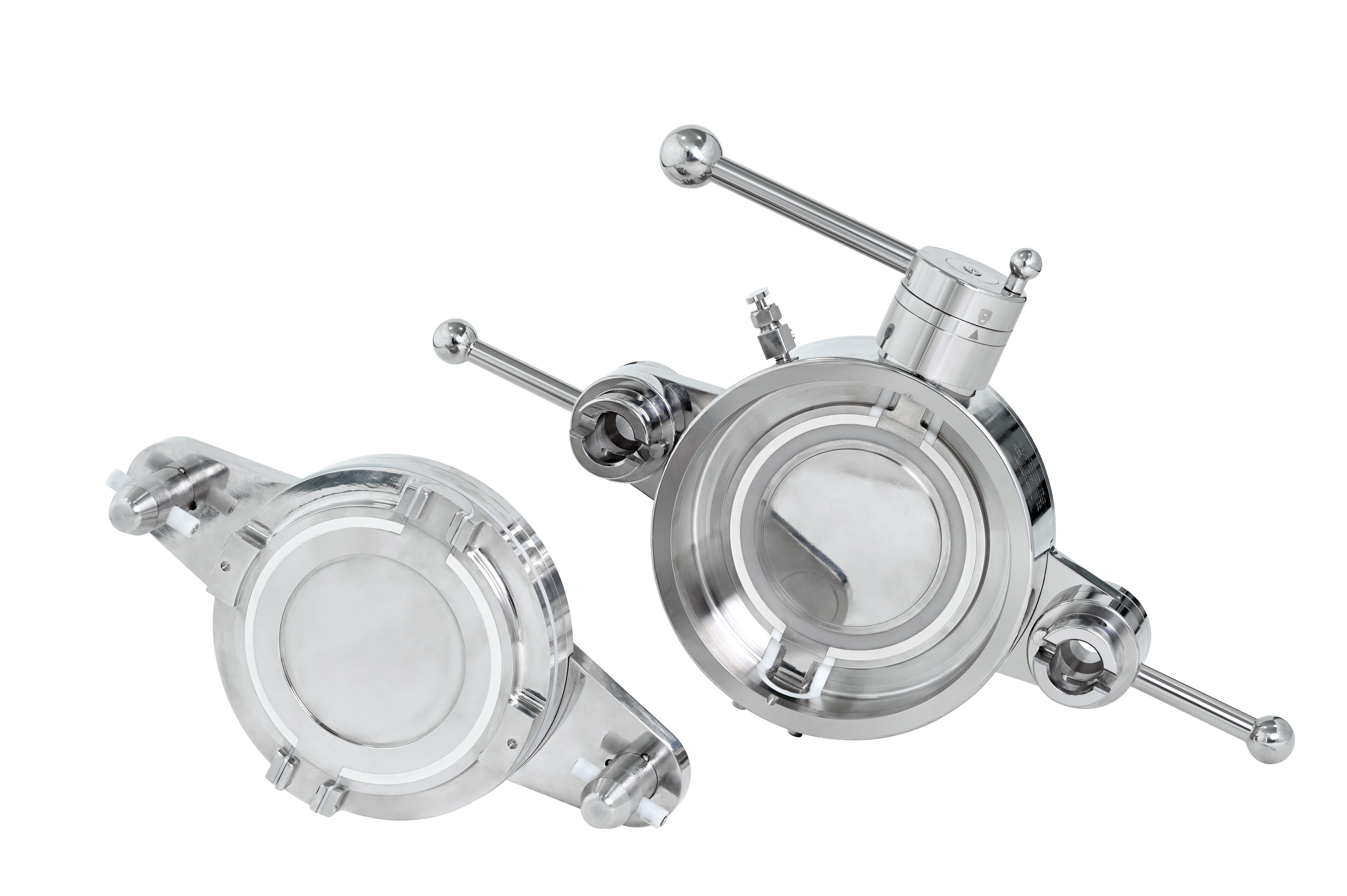
In many valve designs, failure rarely starts in the body or bonnet. It begins at the sealing interface—a few square millimetres of metal that must hold pressure while sliding, impacting, or eroding under flow. The most direct route to extending service life is therefore not simply choosing a harder material, but controlling how that hardness is distributed. A martensitic stainless steel seat may be induction hardened only at the contact face, leaving the underlying core tough enough to absorb shock without cracking. Cobalt-based overlays like Stellite 6 remain common because their chromium carbides resist galling and abrasion, but the same carbides can make machining difficult and can pull out under severe cavitation.
Surface treatments add another layer of control. Plasma nitriding, for example, diffuses nitrogen into the near-surface region of stainless or alloy steel, creating a hard case without the dimensional shifts of a welded overlay. HVOF-sprayed tungsten carbide coatings offer high erosion resistance for throttling and choke valves, but only if the bond line is sound and the coating thickness is matched to the impact angle. Even diamond-like carbon (DLC) coatings have moved from laboratory curiosity to production for low-torque, low-wear ball valve stems, where adhesion and substrate hardness dictate whether the coating survives thousands of cycles.
The less obvious variable is microstructure stability over time. Valves in high-temperature service can lose hardness through tempering or coarsening of precipitates, while those in cryogenic service may face austenite-to-martensite transformation that changes dimensions. Modern powder metallurgy and hot isostatic pressing allow finer, more uniform grain structures than traditional casting, reducing the scatter in mechanical properties from one valve to the next. By pairing these processing routes with selective hardening and coatings, engineers can push failure away from the sealing surfaces and into the far more predictable realm of scheduled maintenance.
Precision Machining Where Microns Matter
In our workshop, a micron isn't just a unit of measure — it's the distance between a perfect fit and a failed part. Every lathe, mill, and grinding station is calibrated to chase tolerances that most shops won't even quote. We regularly hold ±2 microns on cylindrical features, and our inspection reports read like a metrologist's diary, not a sales pitch.
What makes that possible isn't one expensive machine or a lucky operator. It's the way we stage every job: temperature-controlled stock, tool presetting under the same thermal conditions as the spindle, and in-process probing that corrects drift before it becomes scrap. When a batch of medical bone screws leaves our floor, each thread flank has been verified against a master profile — not sampled, every single one.
The real test comes when a customer sends back a mating component and asks why it doesn't wobble. That's the micron game. We've built our entire workflow around the idea that precision isn't a spec on a drawing; it's a habit you repeat until the measuring machine gets bored.
Testing Protocols That Go Beyond Industry Norms
Most labs stop at the minimum required checks, but our testing protocols are built to catch what standard procedures miss. We deliberately stress materials under conditions that mimic years of real-world use in days, not weeks. This means cycling through temperature swings, humidity extremes, and repeated load simulations that go far beyond the typical pass-or-fail checklist.
We also run side-by-side comparisons against control samples taken from the same production batch, so any deviation is tied directly to the variable being tested rather than manufacturing noise. Our technicians log every observation in a shared live document, allowing engineers to spot subtle performance drifts before they become field failures. That level of granularity is rare because it slows down the approval pipeline, but we would rather delay a release than ship something we have not truly pushed to its limits.
Perhaps the biggest differentiator is that we invite independent third-party auditors to review our raw test data, not just the final summary. This transparency forces us to keep our protocols honest and continually refine them. Over time, that has led to a living testing framework that evolves with each product generation, rather than a static manual that gets dusted off for compliance season.
Sustainable Manufacturing Without Compromise
Sustainability in manufacturing often gets framed as a trade-off: you give up speed, precision, or durability to lower your environmental footprint. That assumption is baked into everything from procurement spreadsheets to boardroom debates. But it misses what actually drives waste in most production lines. Scrap, rework, and energy-hungry retrofits aren't signs of ambitious sustainability targets. They're symptoms of processes that weren't designed to respect materials in the first place. When a cutting path generates excess swarf from a poorly chosen toolpath, that isn't unavoidable. It's a failure of planning, not a sacrifice demanded by the planet.
The shift comes when you stop bolting sustainability onto the end of a manufacturing process and instead build it into the constraint set from day one. This means treating energy per part, material yield, and tool life not as reporting metrics but as real-time control variables. A spindle that ramps down during idle periods, a coolant system that recirculates instead of dumping, a fixture designed to clamp with half the pneumatic force — each of these improves both the bottom line and the environmental ledger. None of them compromise precision or cycle time. In fact, a machine that wastes less energy and produces fewer defective parts runs tighter tolerances and hits delivery dates more reliably. The compromise narrative exists because we inherited workflows that never questioned their own inefficiencies.
That's why the phrase "without compromise" matters. It isn't a marketing slogan; it's an engineering challenge. Manufacturers who treat energy and material flow as first-class constraints discover that the same changes that reduce CO₂ per unit also reduce downtime, extend tooling life, and cut inventory carrying costs. The real compromise would be continuing to treat waste as an externality. When you design every operation — from blank loading to final inspection — with the assumption that material and energy are finite inputs, the result isn't a greener version of the same factory. It's a factory that finally runs the way its own physics always wanted it to.
Custom Solutions for Complex Flow Challenges
Every process line has its own quirks—viscosity swings, abrasive slurries, tight spaces, or pressure drops that make off-the-shelf equipment fall short. Instead of forcing a square peg into a round hole, we start by mapping the actual flow path, then design around the obstacles. Whether it's a multi-phase mixture that separates too quickly or a piping layout that defies standard fittings, the solution often lives in the details: custom impeller geometry, non-standard seal materials, or a manifold that rebalances distribution on the fly.
We've learned that the most reliable fixes come from asking the questions nobody else does—what happens during start-up, how does the fluid behave at 3 a.m., where does the energy actually go? By prototyping and testing against your live conditions rather than theoretical curves, we can deliver a system that not only meets spec but holds up when reality gets messy. No generic catalog picks, no guesswork—just a flow path that finally works the way you hoped it would.
FAQ
Instead of relying on standard production lines, the factory integrates real-time quality checks at every stage, from raw material inspection to final assembly, ensuring each valve meets stricter tolerances than typical industry requirements.
They use a combination of automated vision systems and manual expert review, so no defect goes unnoticed. This dual-layer inspection catches issues that purely automated or purely manual systems might miss.
Oil and gas, chemical processing, water treatment, and power generation are the primary sectors. Their valves are designed to handle high pressure and corrosive environments without frequent maintenance.
One notable development is a self-lubricating valve stem design that reduces wear and extends service life by up to 30% compared to conventional models, lowering replacement costs for clients.
It means shorter lead times due to streamlined production, fewer failures in the field, and more predictable performance data. Customers can plan maintenance with confidence instead of reacting to unexpected downtime.
They use statistical process control and digital tracking for every component batch. If a single parameter drifts outside the acceptable range, the entire batch is quarantined and rechecked before release.
Initially they may cost slightly more, but the total cost of ownership is lower because of reduced maintenance, longer intervals between replacements, and fewer operational interruptions.
The team is currently testing smart valves with embedded sensors that provide real-time performance data, allowing operators to monitor valve health remotely and address issues before they cause failures.
Conclusion
Active Valve Factory has rebuilt its entire approach to valve engineering, starting with first-principles design rather than incremental tweaks. Their team revisits flow path geometry, seal geometry, and actuation interfaces to eliminate weak points that plague conventional valves. Material selection is equally rigorous: advanced alloys and polymer-metal composites are chosen not just for corrosion resistance but for how they behave under thermal cycling and abrasive media, extending service life well beyond typical expectations. In the machining hall, tolerances are held to micron-level precision, with in-process measurement feeding back into the CNC controls in real time. This obsession with small details means every component mates perfectly, reducing leak paths and torque inconsistencies from the very first cycle.
Testing goes far beyond standard hydrostatic checks. Prototypes endure rapid pressure swings, thermal shock, and vibration profiles that mirror actual plant conditions, often for weeks. Only after surviving these accelerated life tests does a design move to production. Sustainability isn't an afterthought either—the factory uses closed-loop coolant systems, recycles metal chips, and selects low-emission coatings without sacrificing hardness or chemical compatibility. When off-the-shelf products don't fit, their engineering group works directly with plant operators to develop bespoke valve configurations, from exotic trim materials to unusual end connections. The result is a manufacturing culture where every valve leaving the floor carries a level of reliability and traceability that resets what customers expect from a valve supplier.
Contact Us
Contact Person: Ananda
Email: [email protected]
Tel/WhatsApp: 8619016718200
Website: https://www.wzaomi.com